A two-day workshop in the framework of Arctic Science Summit Week 2020, Akureyri, Iceland, 29-30(TBC) March 2020 funded by IASC - the International Arctic Science Committee The IASC Social Sciences and Humanities Working Group (WG), together with IASC’s Cryosphere, Marine, and Terrestrial WGs, invites you to a unique cross-disciplinary workshop attempting to bring together the …
Category: Fieldwork
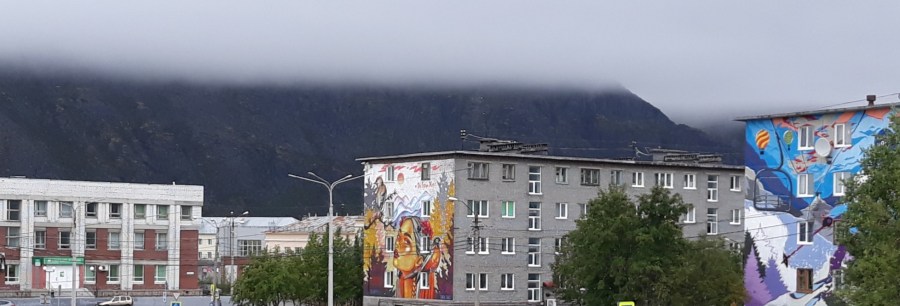
Arctic youth well-being reserach project WOLLIE goes to Kola Peninsula
Last week, the mid-term meeting of our research project on youth in Arctic industrial settlements (WOLLIE) took place in Kirovsk and Revda, two mono-industrial cities in the Murmansk Region, North-West Russia. While discussing our project goals and achievements so far, we also visited several places. Being highly industrialised, densely populated and relatively compact, the Murmansk …
Continue reading Arctic youth well-being reserach project WOLLIE goes to Kola Peninsula
The perfect place for comparative border studies?
Being here in Blagoveshensk (for a conference on a different topic), I realise how cool this place is for border studies. It's just like Tornio / Haaparanta in Finland/Sweden, or Frankfurt/Oder with Slubice in Germany/Poland, or Narva / Ivangorod in Estonia/Russia, and probably tons more such places. The Amur river connects or divides Blagoveshensk on …
Continue reading The perfect place for comparative border studies?
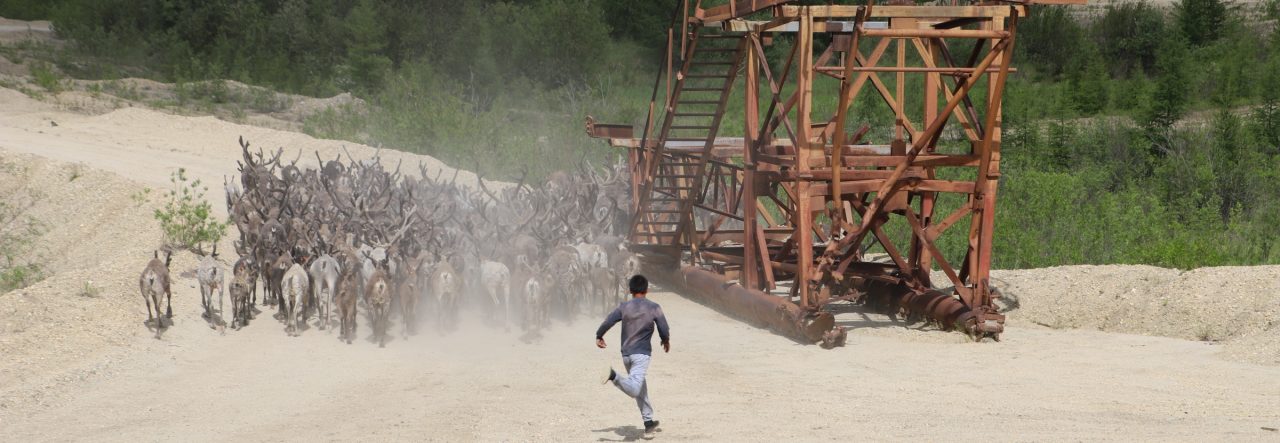
Do animal livelihoods in the Arctic suffer from global warming?
This was one of the questions covered in an interdisciplinary exhibition on the effects of global warming and melting permafrost in Yakutia, on display in the Hokkaido museum of northern peoples. The exhibition with the title Thawing Earth - Global Warming in Central Yakutia is a nice example of co-production of knowledge between natural and …
Continue reading Do animal livelihoods in the Arctic suffer from global warming?
Arctic Youth well-being project participating in circumpolar comparison
The team of the joint Finnish-Russian project studying well-being among youth in Arctic industrial cities (WOLLIE) was invited to participate in the circumpolar study on Arctic Youth and sustainable futures, headed Joan Nymard Larsen, and the Arctic Human Development Report and Arctic Social Indicators editors team. At a meeting in Stockholm in the beautiful building …
Continue reading Arctic Youth well-being project participating in circumpolar comparison
A new book about Yukaghir people
Our anthropological team would like to congratulate Dr Cecilia Odé on her new book Life with the Yukaghir: North-East Siberia’s oldest tundra people. The book was published this summer in the Netherlands. Cecilia wrote it as a diary about her linguistic fieldwork trips to the far Northeast of Siberia. In this book Cecilia Odé describes her field …
Assessing damage to indigenous cultures by industrial development with maths?
I just read an interesting post by the Russian news agency TASS (in Russian) announcing proudly the launch of a new method for assessing damage to indigenous culture and livelihood during industrial development of the Arctic. Russian scholars in this field know that there has been long a discussion about how the only Russian law …
Continue reading Assessing damage to indigenous cultures by industrial development with maths?
 Arctic Anthropology