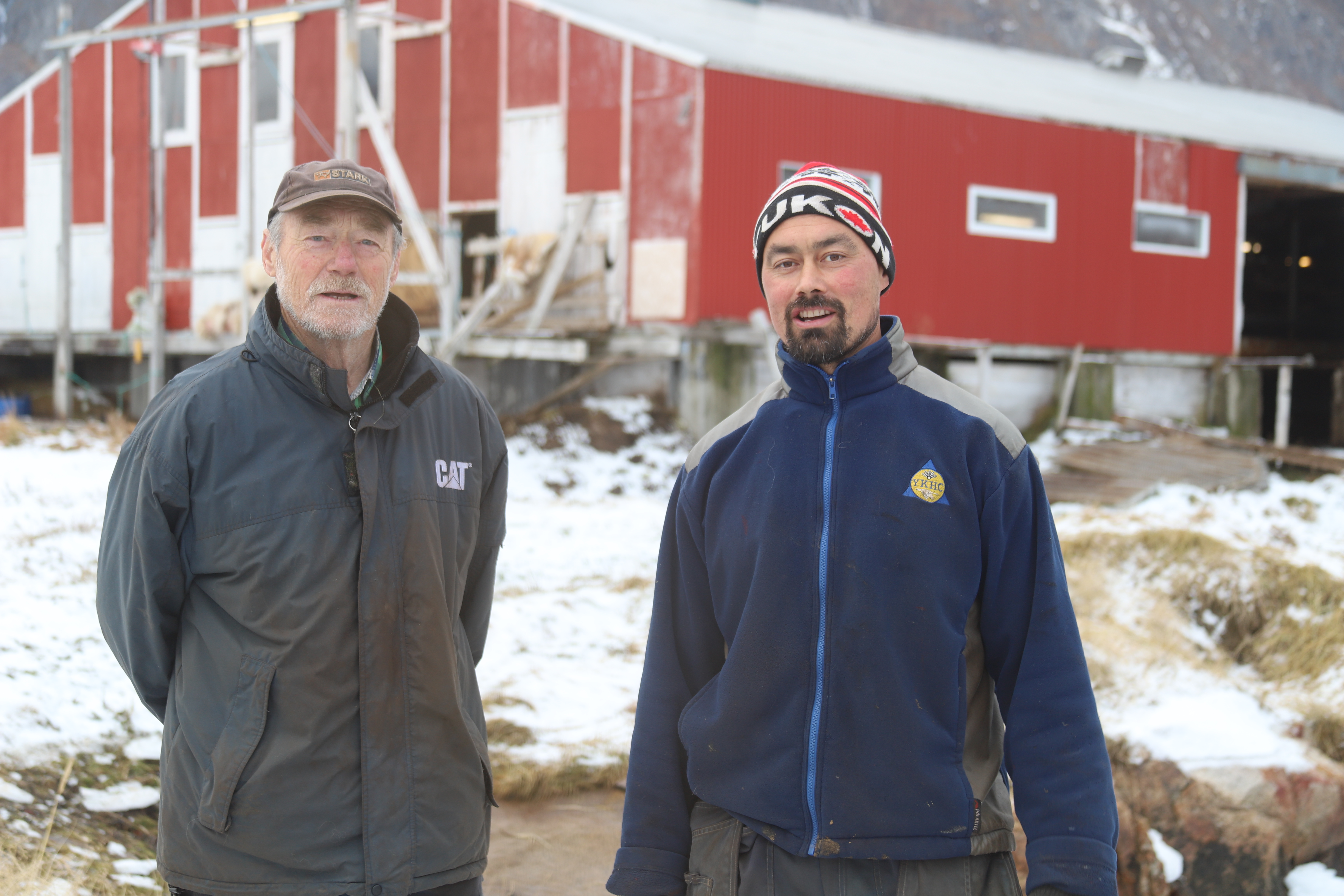
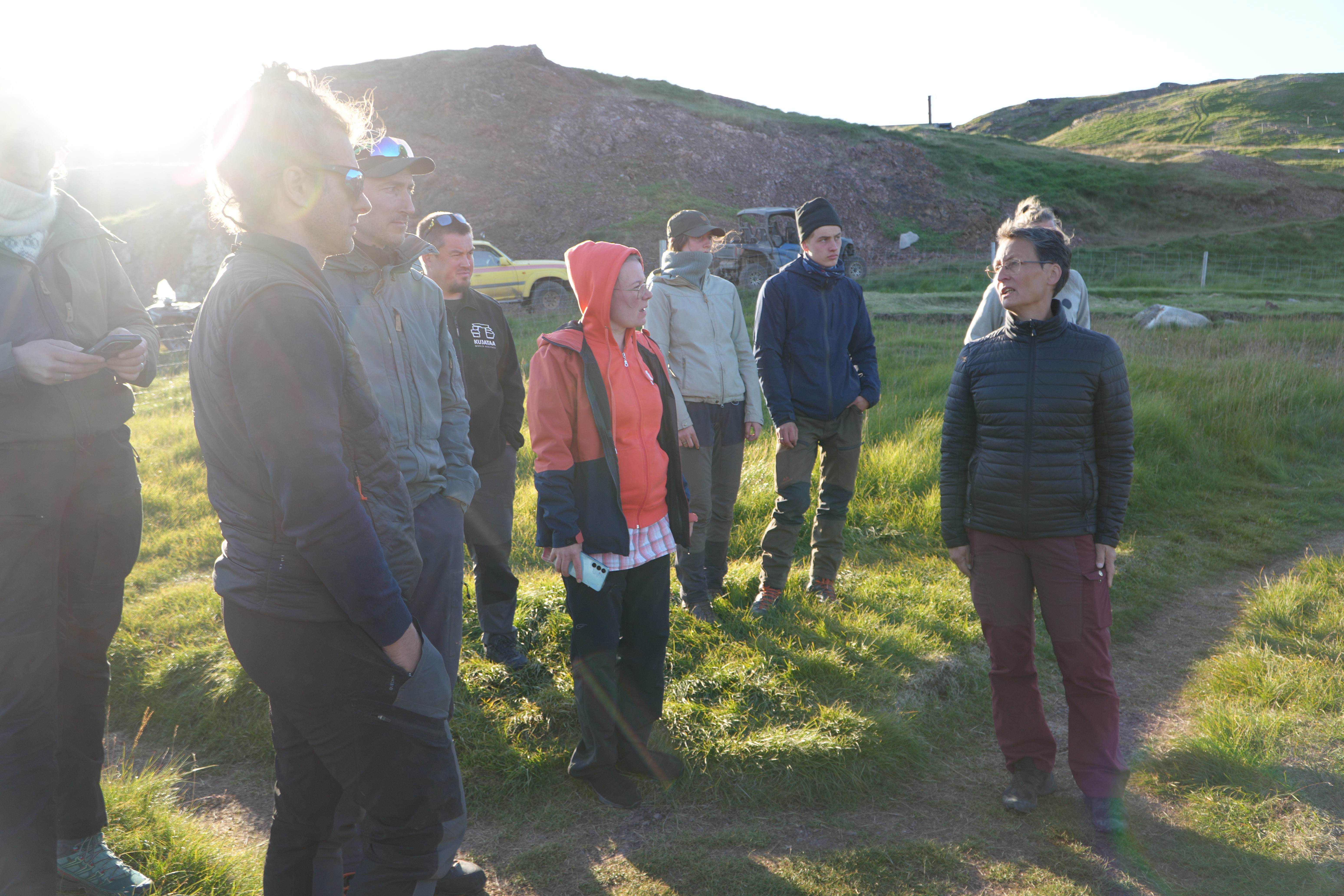
“I just looked at the land and started building”. Our group of guests from Norway and Finland in our NAPA project “empowering green transition from the grassroots” sits around a coffee table with a gorgeous view to the fjord dotted with icebergs. The answer of Lars Nielsen from Kangerluarsorujuk to a question how he made the calculations for the micro-scale hydropower plant that provides energy for his sheep farm could not sound simpler, as the quote above shows: start doing it.
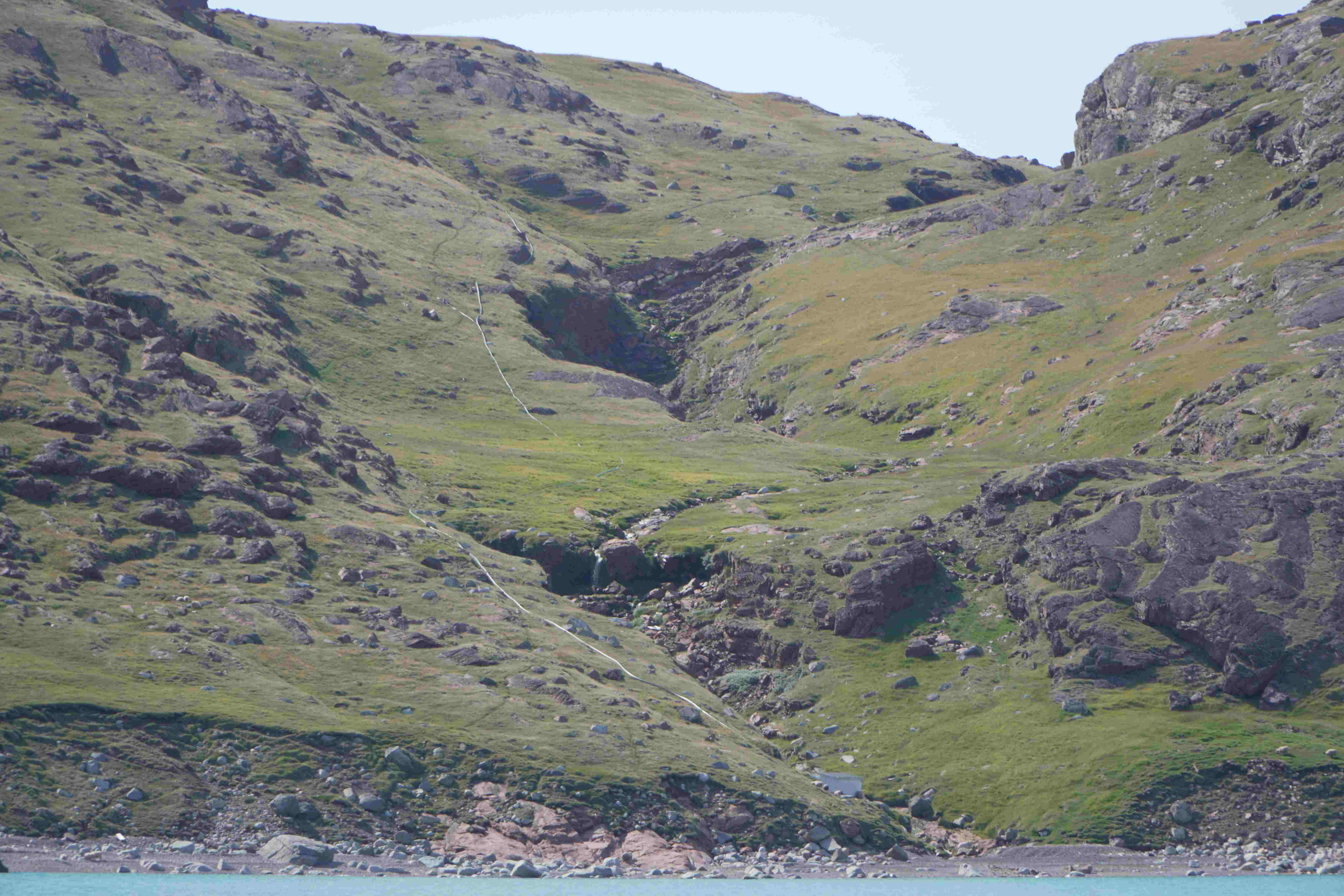
We are just back from a walk up the hill to see the dam and reservoir that feeds this hydropower plant, and further down the hill the little powerhouse, where a Francis turbine and a generator turn the waterpower into electricity that covers the farm’s needs. Many of us would think of such a building project as needing years and years of planning, calculating, technical documentation and permitting processes before anything can actually be done on the land. Not here: the permit from the municipality is just one signature away, everybody knows everybody, and the farm has machinery such as excavators on their own. Most importantly, Inuit farmers in South Greenland have lived for 100 years between the ice-sheet and the fjords in South Greenland, cultivating fields and grazing their sheep on the same land as the Norse did in the middle ages. Both the Inuit and the Norse heritage on this land is today known as the Kujataa UNESCO world heritage area, managed by Innovation South Greenland. The farmers here are highly skilled experts when it comes to knowing the affordances of land and water. Some of them topped this up with technical education, in Kunuk Nielsen’s case electrician. None of the farms is on the electrical grid. All of them are isolated hamlets away from towns and villages. So people are used to living autonomously: if they need something, they do it rather than waiting for someone to deliver.
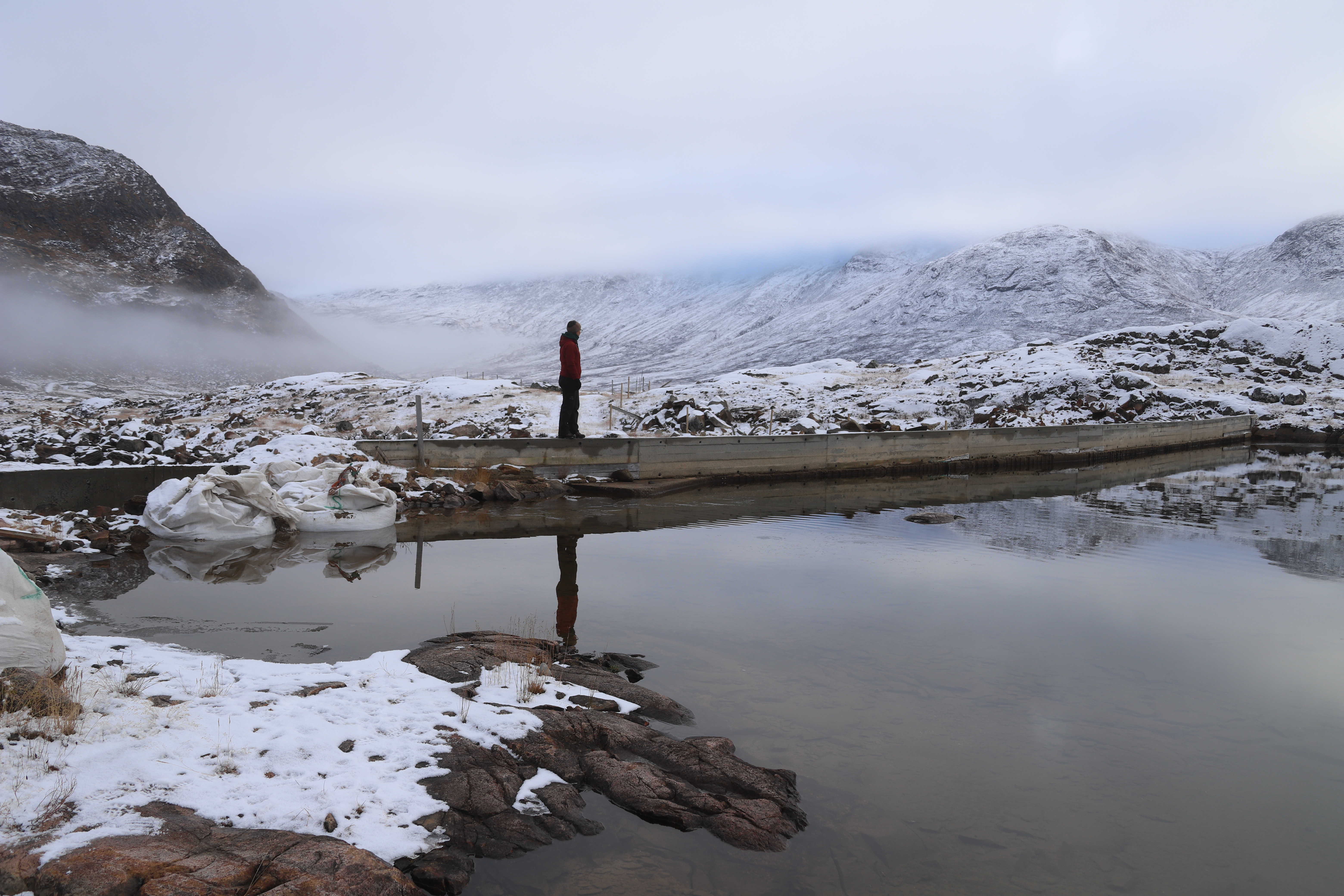
Up on the dam, Lars’ son Kunuk reminds us: “do you remember last time you were here? we were building on this site [increasing the dam in height]. Now we are finished. Over there we still have sandbags, but it works. This higher water level gives us at least some two more weeks of electricity”. But even that increase was not enough: in winter 2025/26 Kunuk had to switch to diesel power for two months. “The snow was very late, the land got frozen, and there was no water from the mountains”. This is exceptional, because usually the construction provides some 15 KW power even in winter.
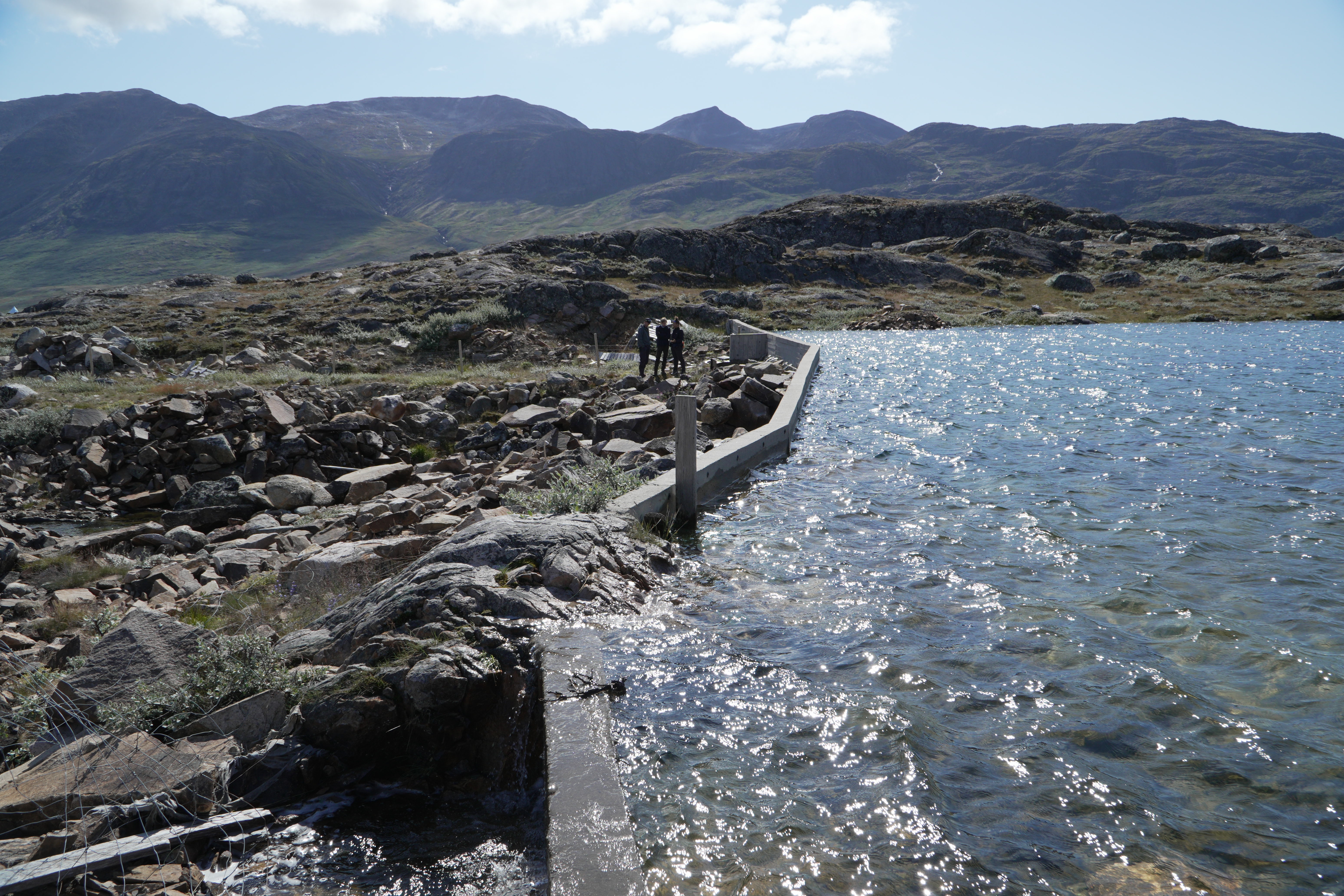
Lars Nielsen had built his first hydropower construction already in the late 1980s, and then did a major upgrade by building a dam some 13 years ago. He had built it in a way that the water would keep flowing in winter. To the question about the planning for this construction so it would not freeze every winter, Kunuk says “we just know that: as long as there is water here, this will not freeze”. The outlet pipe from the reservoir is placed strategically. In the pipe, the water flow is so fast that even in winters the family got some 15 KW out of their hydropower. “We hope next winter we will run this round the year”. This is a major advantage over solar power, if we think of alternatives: while solar panels are cheap and easy to install, they are no use in the darkness of the Arctic winter. Kunuk’s colleague Aka Motzfeldt from Kangerlua has his roof full of solar panels, but “in winter we get 5 minutes of shunshine a day”, he smiles and points to the mountain behind his house blocking the sun from the roof of his farm house.
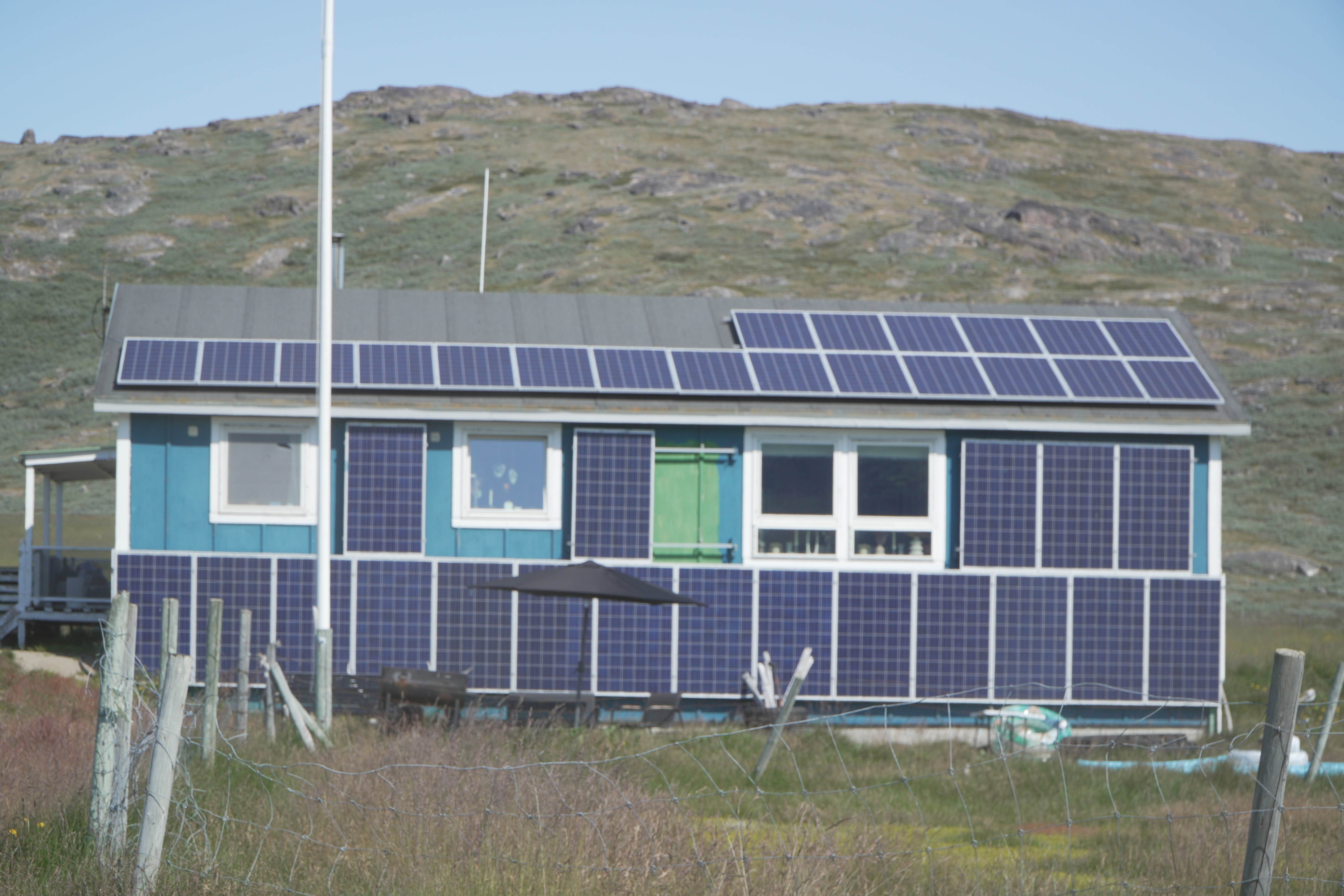
Lars and Kunuk Nielsen’s goal with their micro-hydropower is to be energy autonomous with their farm, and have the diesel generator only as a backup to be prepared for crises such as this winter, when the plant ran dry. Aka and others want to follow such examples.
Kangerluarsorujuk hydropower station was among the first to be built in this area.
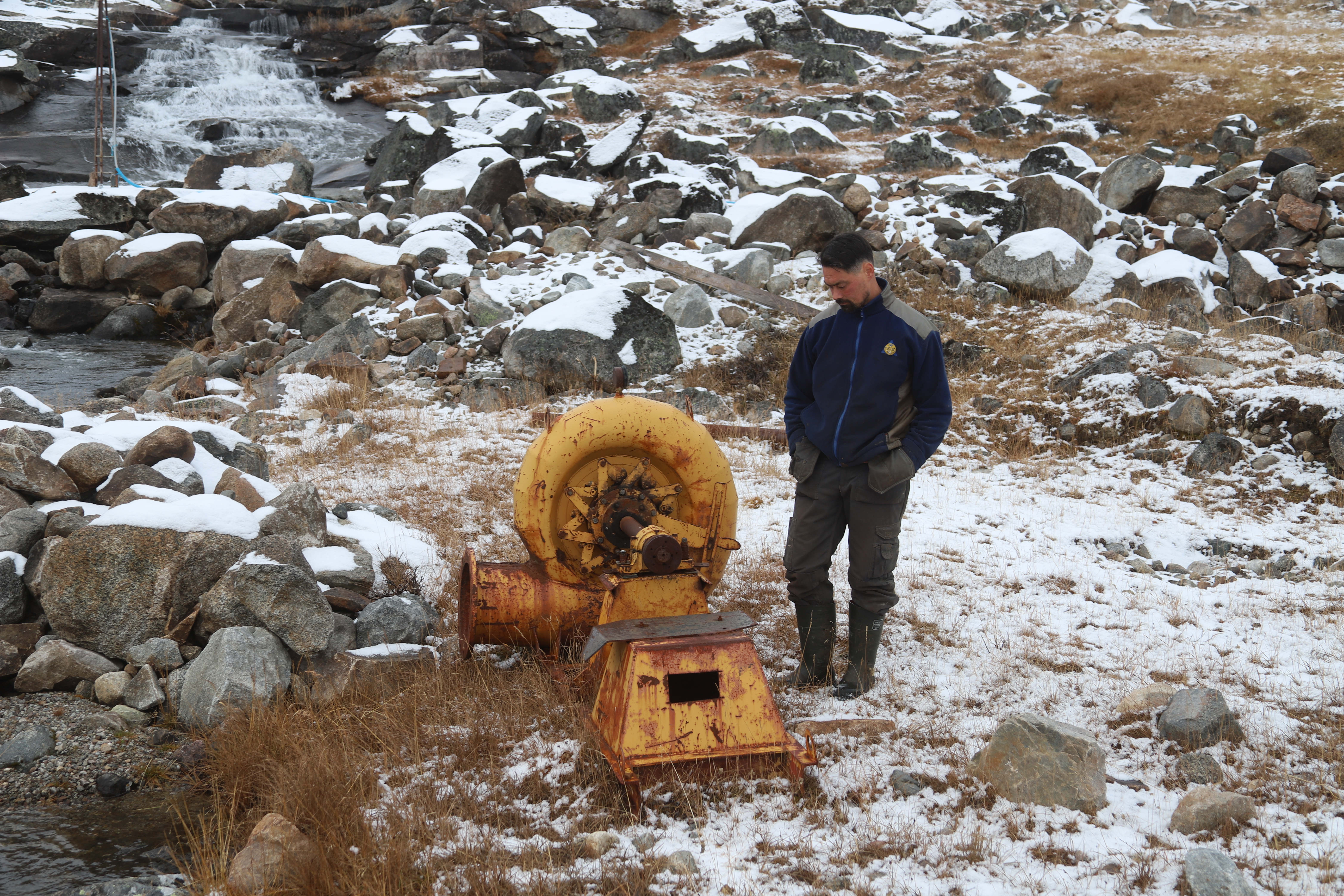
Kunuk Nielsen has with the years advanced to an expert, who advises also other farmers on their way to more energy-autonomy and away from expensive and dirty diesel generators. In the 1980s there were several plans for bigger hydropower plants in South Greenland. These were projects designed by Europeans at a time when Greenland was still part of the European Community (predecessor of the EU, Greenland left in 1985). None of these plans were implemented, but other than for the grassroots power stations on farms, books of technical documentation were prepared before anything was built. Our research partners at Kujataa found these documents. While they contain useful technical information, they are drawn up in offices by people connected to southern colonial powers. These power plants would not have benefited the Inuit farmers on their isolated hamlets. Interestingly enough, this has not changed: the Greenlandic state energy company Nukissorfiit runs a hydropower plant in Qorlortorsuaq, providing electricity for South Greenland’s two main towns, Qaqortoq and Narsaq. But even though the high voltage power line from that powerplant runs just above some sheep farms, not a single farm is on the grid for this green energy. Farmers are left on their own to provide their households with energy. This increases inequality between those with access to the grid and those without. Even though fuel is not separately taxed in Greenland, it costs a fortune of money, effort and time to bring to these isolated farms. And we do not even want to imagine the carbon footprint of the transportation of this fuel from its origin all the way to the farms beyond the end of the fjords in South Greenland. People like Lars Nielsen saw the affordances of the water running down the mountains behind his house in the late 1980s. Today 8 out of 30 farms in South Greenland have built their own hydropower stations of similar size. Almost all of them are designed by the farmer inhabiting the place, individually tailored according to the affordances of the local rivers and lakes, and to the needs of the household. Only in one case, Qorlortup Itinnera, the hydropower plant provides to two farms, a case that we featured in this blog before .
This is green energy produced as locally as it gets. In a way the equivalent of local food from the farm to your stomach – local electricity from the river on your farm to your living room.
In a way, the micro-scale hydropower on farms in Greenland is developing into a movement literally from the grassroots on the fields, from the farmers lived experience of autonomy born from their ways of knowing, experiencing and daily working with their land and water. Many around the world suffer from geopolitical crises such as the closure of the Strait of Hormuz and horrendous fuel prices. While politicians talk about Greenland between the path to independence and the threat of American interests, we see here autonomy and crisis preparedness lived out every day. The eight running farms have proven that this works, but it takes a lot of courage, investment and also non-practical skills to implement a new energy autonomy project on a farm which still runs on diesel power. This is where our NAPA project aims to make a difference: we document the stories of those people who have done it already, contribute to networking the people who would like to build their own energy solutions, and try to assist them in finding the best deals for the hardware of their solutions.
To this end, Innovation South Greenland employs a special technical consultant for sheep farmers, Erik Egede Motzfeldt, who helps searching the internet for materials, parts, organising logistics, networking orders to benefit from volume, and assisting in paperwork.
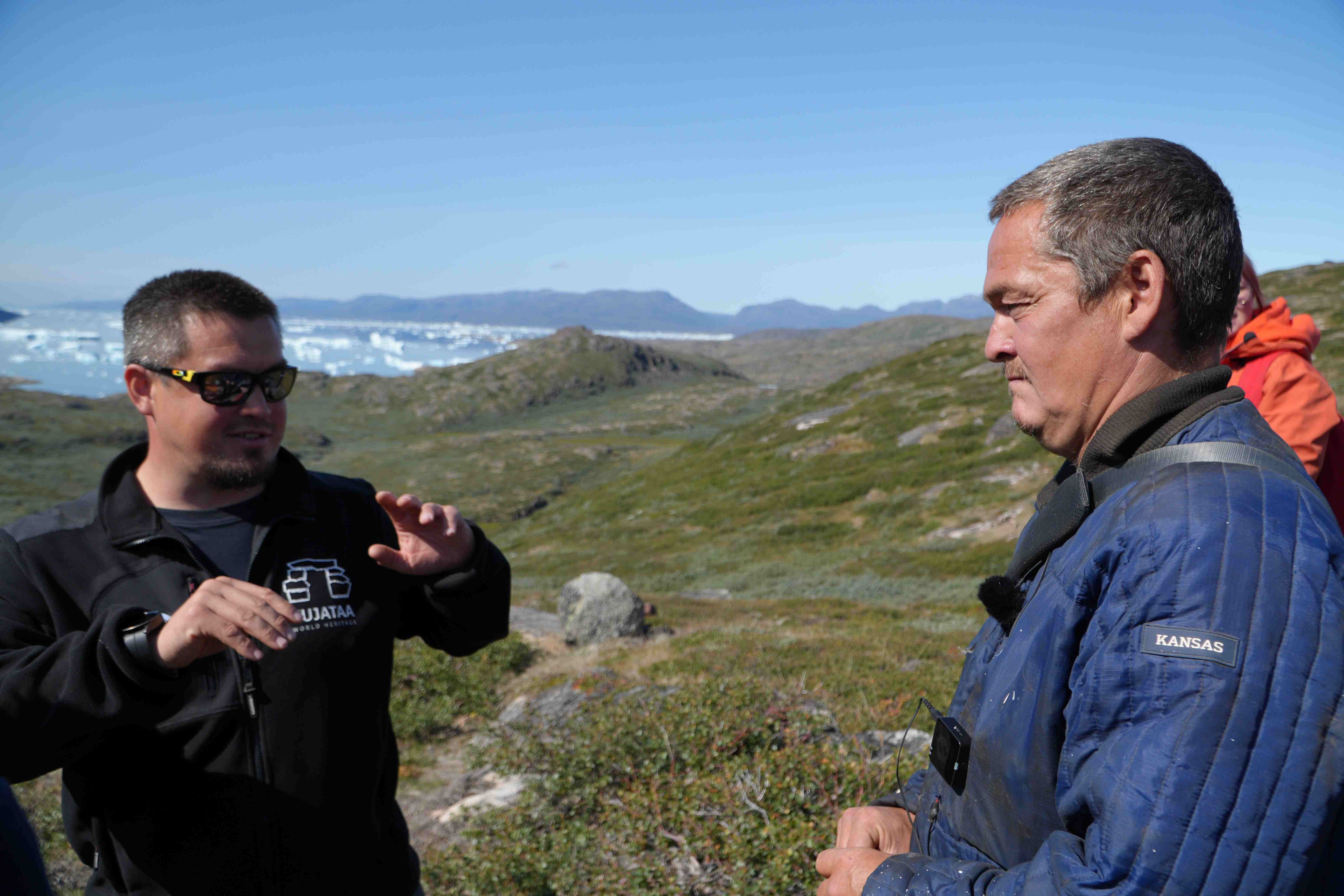
However, he has on his shoulders far more than farmers’ plans for their electricity autonomy: he consults for any technical needs, from tractor spare parts, engine control unit updates, and hay-making appliances to sheep house installations. The Norwegian engineering partners, Matteo Chiesa from UiT, and hydropower practitioner Rikard Bakkehaug Persen, the husband of Signe Blixgård, who runs the world’s northernmost goat farm together with her father Andreas Blixgård, in our NAPA project collaborate on the technicalities for possible new stations with Erik, alongside the entire team working together to consider feasibility. Together with Berit Kristoffersen from the UiT Arctic Centre for Sustainable Energy we will welcome our Greenlandic partners to Arctic Europe for exchange of experiences in energy preparedness on remote farms as well as visiting a diverse set of end-of-the-grid solutions and renewable technologies.

If you say it’s possible to build, I can sleep well tonight”, says Aka Motzfeldt from Kangerlua, who aims to harness the water in a lake above his farm for achieving complete autonomy that his solar installation do not yet deliver. He does not seem to be a person who would need outsiders knowledge to tell him what is possible on his land. Rather, sometimes it feels reassuring if your plans make sense to people with experience from elsewhere. And sometimes advice from beyond the Inuit way of knowing the land is indeed helpful: in the neighbouring farm to Kangerlua, Tasiusaq, Kilaasi and Aviaja Lennert show us a hydropower turbine that they have salvaged from the 1980s when hydropower was planned to supply the village of Qassiarsuk with electricity. This village is the cradle of Inuit modern sheep farming, built on viking ruins, about which this blog has earlier entries.
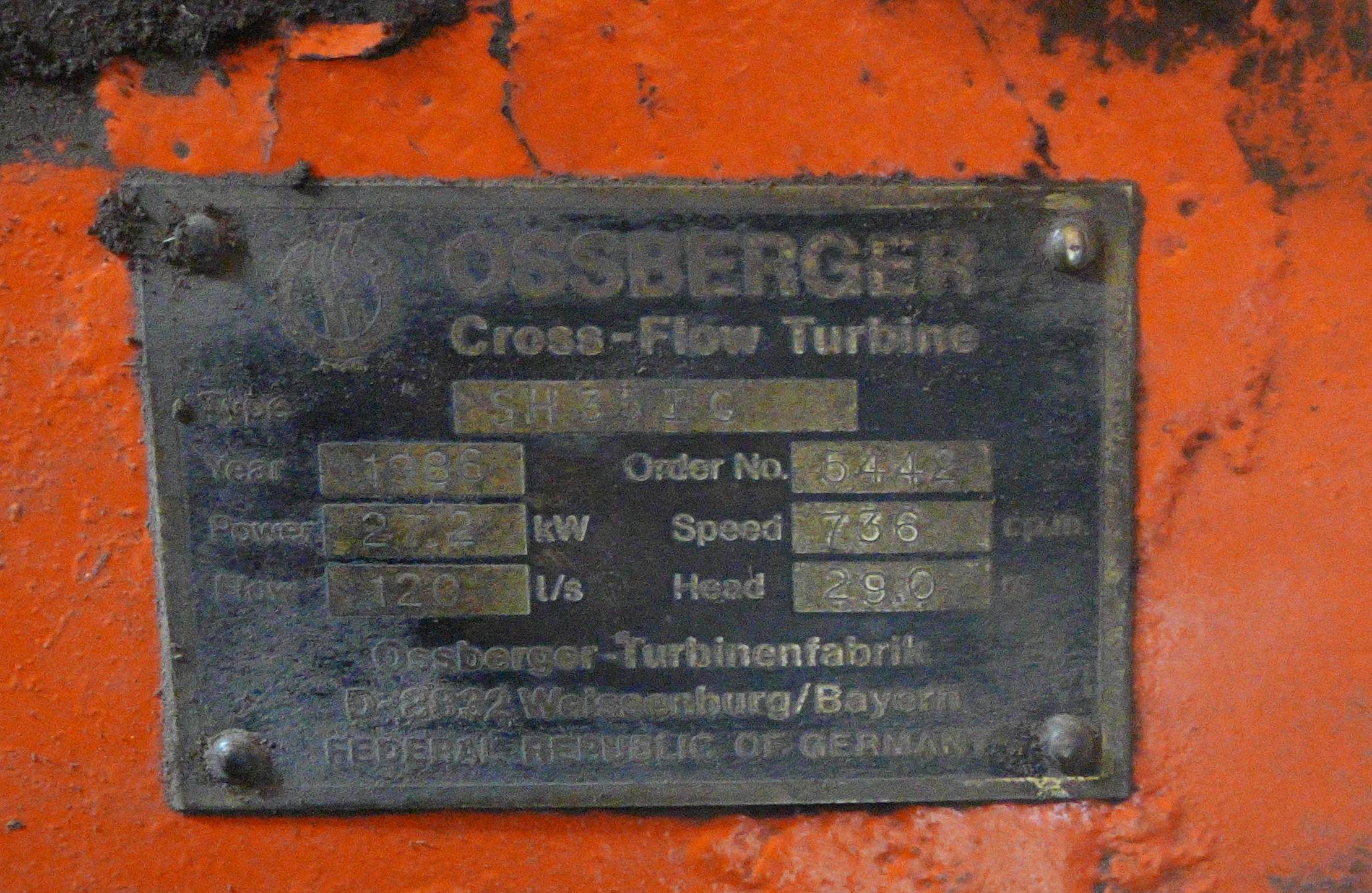
In Qassiarsuk a hydropower installation was actually built in the 1980s, but has not been producing. The Lennerts have the old 27 KW cross flow turbine from Bavaria in their sheep house waiting for revival.
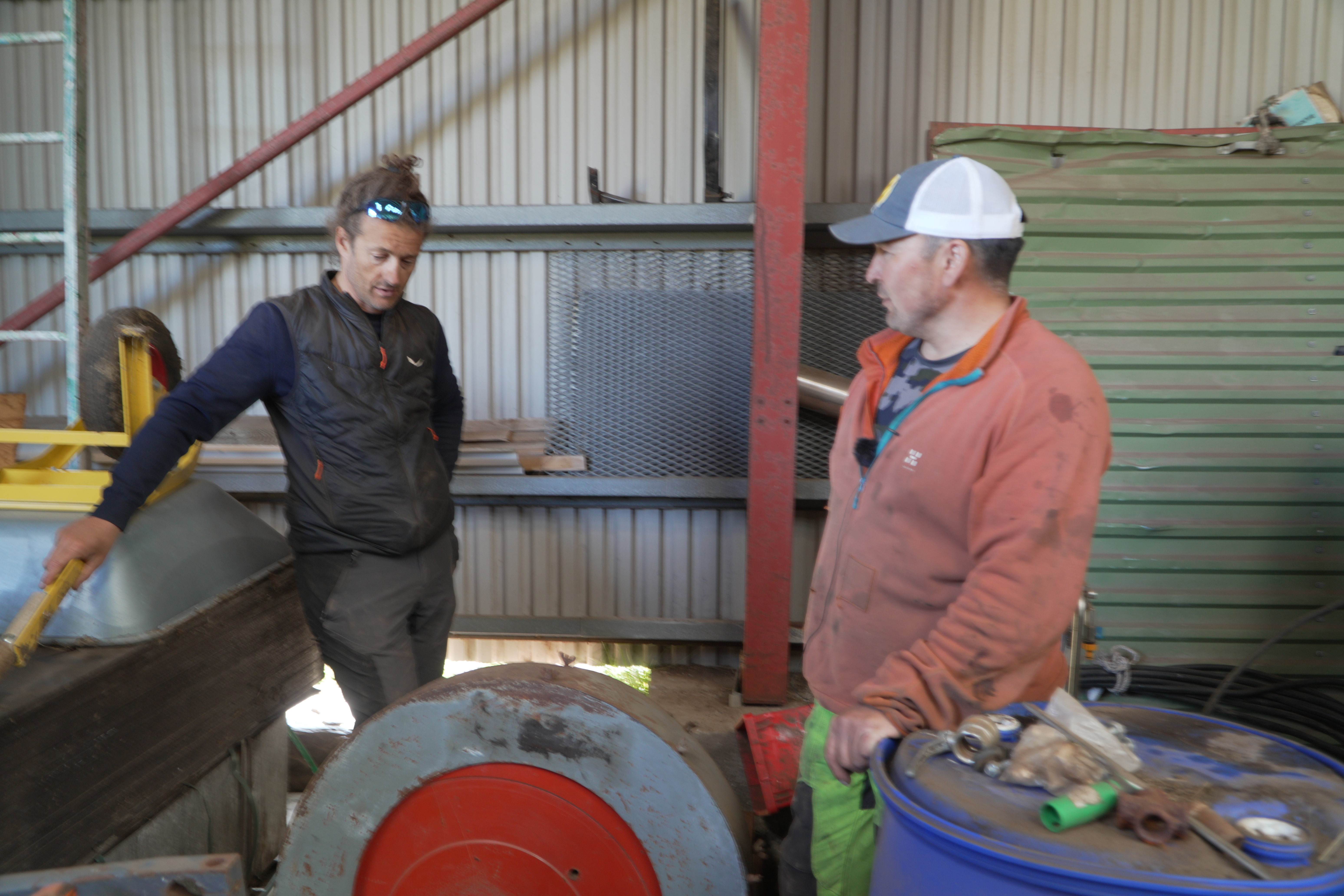
Moreover, the Lennert family have sourced already some pipes readily at their farm in Tasiusaq. All what is needed now is the decision of where and how to install it. These discussions became very technical between Kilaasi, Erik and the Norwegian team: which of the two rivers flowing by the farm is best suited? Can we use the old hardware? Do we need to go for a high voltage cable and transformers, or is the distance from generator to farm close enough to use 230V/400V cables? How many houses can the available water flow and height difference supply? In the following years we have the pleasure and honour to work with local Inuit experts, scientists and UNESCO heritage employees for finding the best solutions. Fascinating to document with multimodal anthropological methods what comes of out this. From the last year of preparatory work and this year’s visit, it feels as if at least four additional farmers are ready to start building their energy autonomy any time. If only they get this little boost of encouragement and advice to match their own knowledge of their land and water with the best available technology on the market.
For an Arctic anthropologist with a background expertise in extractive industries, this is an impressive proof that it is all about local embeddedness: all of Finnish Lapland has a legacy of hydropower-extractivism, with big power plants designed in far away southern offices. And remember the Sámi indigenous movement started with opposition against hydropower in Alta, Finnmark. Not to mention the relations between the James Bay Cree and Hydro Quebec. These renewable extractivist projects permanently disrupted local and indigenous livelihoods, while the ones we are working with in Greenland enable them to thrive. Green Hydropower built by Inuit farmers themselves in midst viking ruins in partnership with a UNESCO World Heritage Site: can it become more sustainable?
Florian Stammler, with Arnaq Bjerge Petersen and the project team of NAPA “empowering green transition from the grassroots” (2025-NAP-0046)

