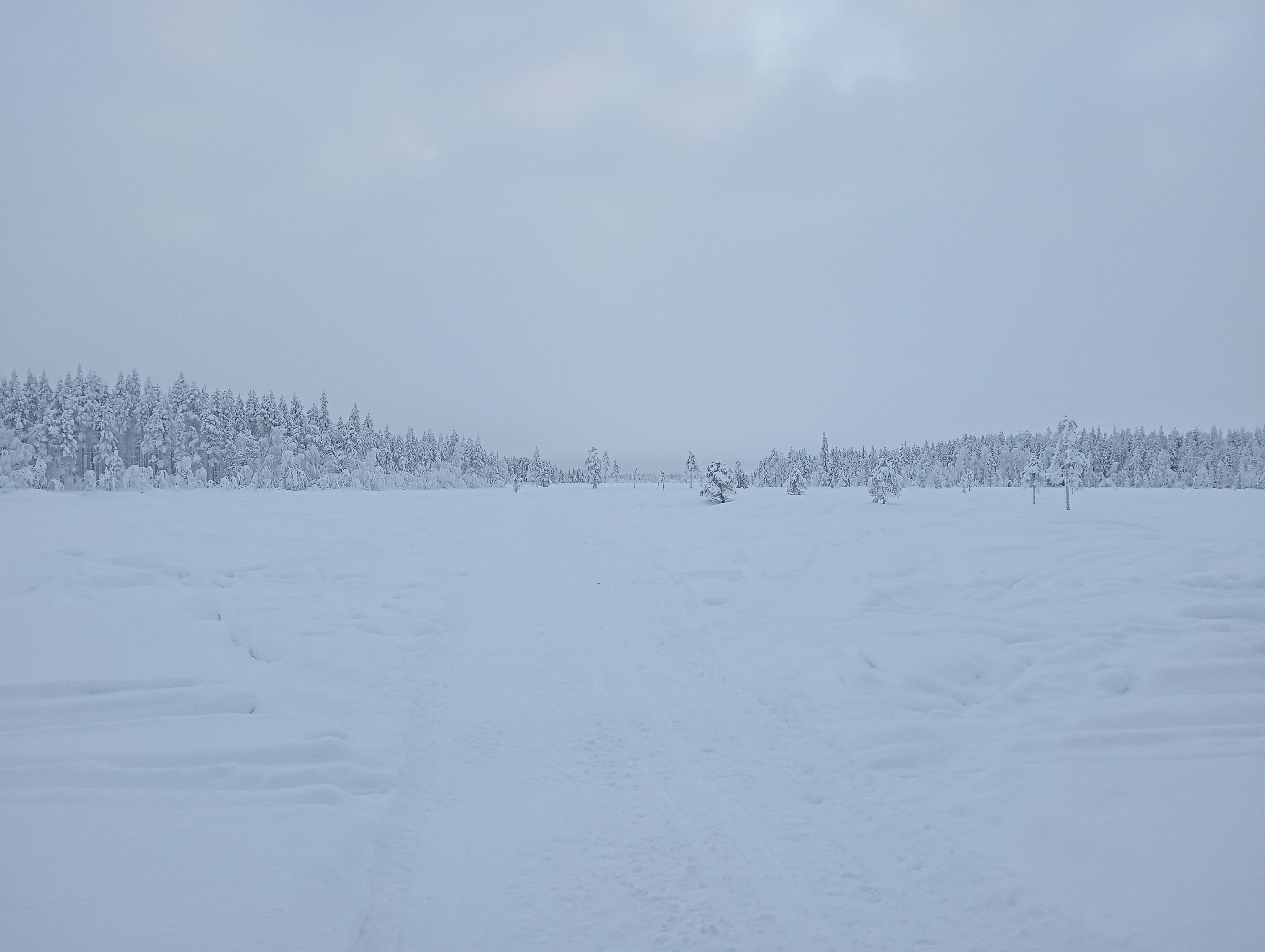
Climate change is often described as a slow and uneven process. In recent years, winters in the European North have felt milder, or at least less persistent. Minus 30 might last a day or two, then ease again. Over time, the cold became something manageable, something to be endured for a few days without rearranging life. This winter was different. Many said it was the coldest in years. Temperatures of minus 30 + lasted for weeks and months.
In towns like Rovaniemi, of roughly 60,000 inhabitants, you will find several big supermarkets, with constant access to food and other supplies, pharmacies, plenty of fuel stations, a hospital, and an airport. Life is affected by the cold, but it does not depend entirely on the weather. Maybe one will slow down, skip skiing at -35, or work from home. But much of Western-style life continues, circulating around schooling, meetings, clocks, and deadlines.
Spending this winter in a village of 200 people in Swedish Tornedalen taught me a very important lesson: time is shaped by conditions rather than calendars or expectations. The cold can organise our lives fully, and everything will depend on it. One needs to learn how to practice patience and let go of plans, schedules, and the urge to get things done.
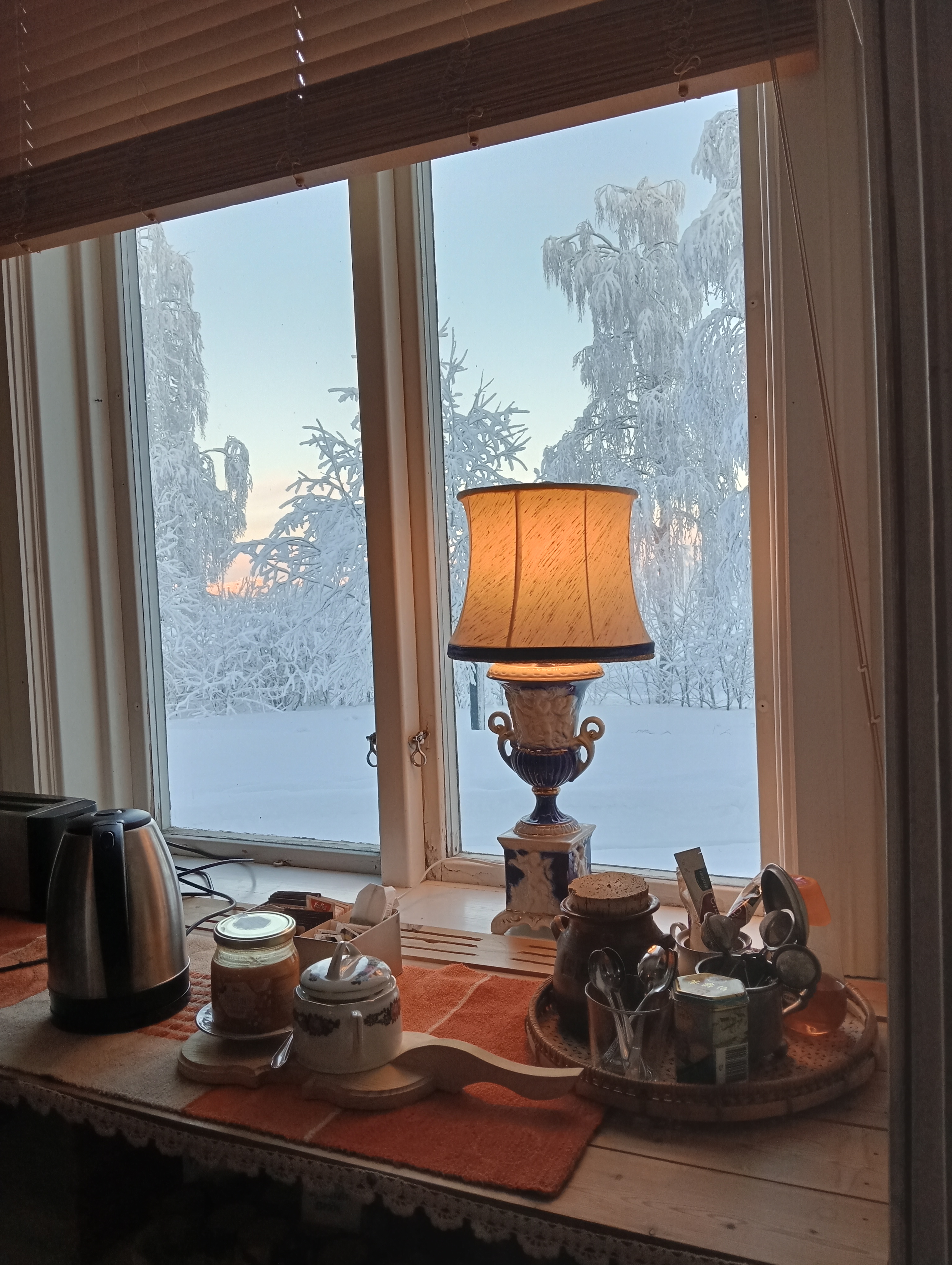
Life is organised differently when the temperature reaches -30 or -35 for several weeks, with only a few hours of daylight. Across a 100-kilometer stretch, there was just one grocery store, open only a few hours each day. Beyond that, there were no fuel stations, pharmacies, healthcare facilities, or other service points. In extreme cold, time behaves somewhat differently. People cancel plans, drives, deliveries, services. Plans become tentative. Things will happen when they can happen—when it gets warmer, when the light returns, when conditions allow, someday. There is no space for anger or disappointment. This creates a different relationship to the future. Waiting is not a passive waste of time when the world is not organized around efficiency.
My neighbour, an experienced mine truck driver, told me that by law, road traffic should stop when the temperature reaches -50. Then the fuel and other liquids in the car freeze; even when driving, the heat from the car will not manage to heat them up.
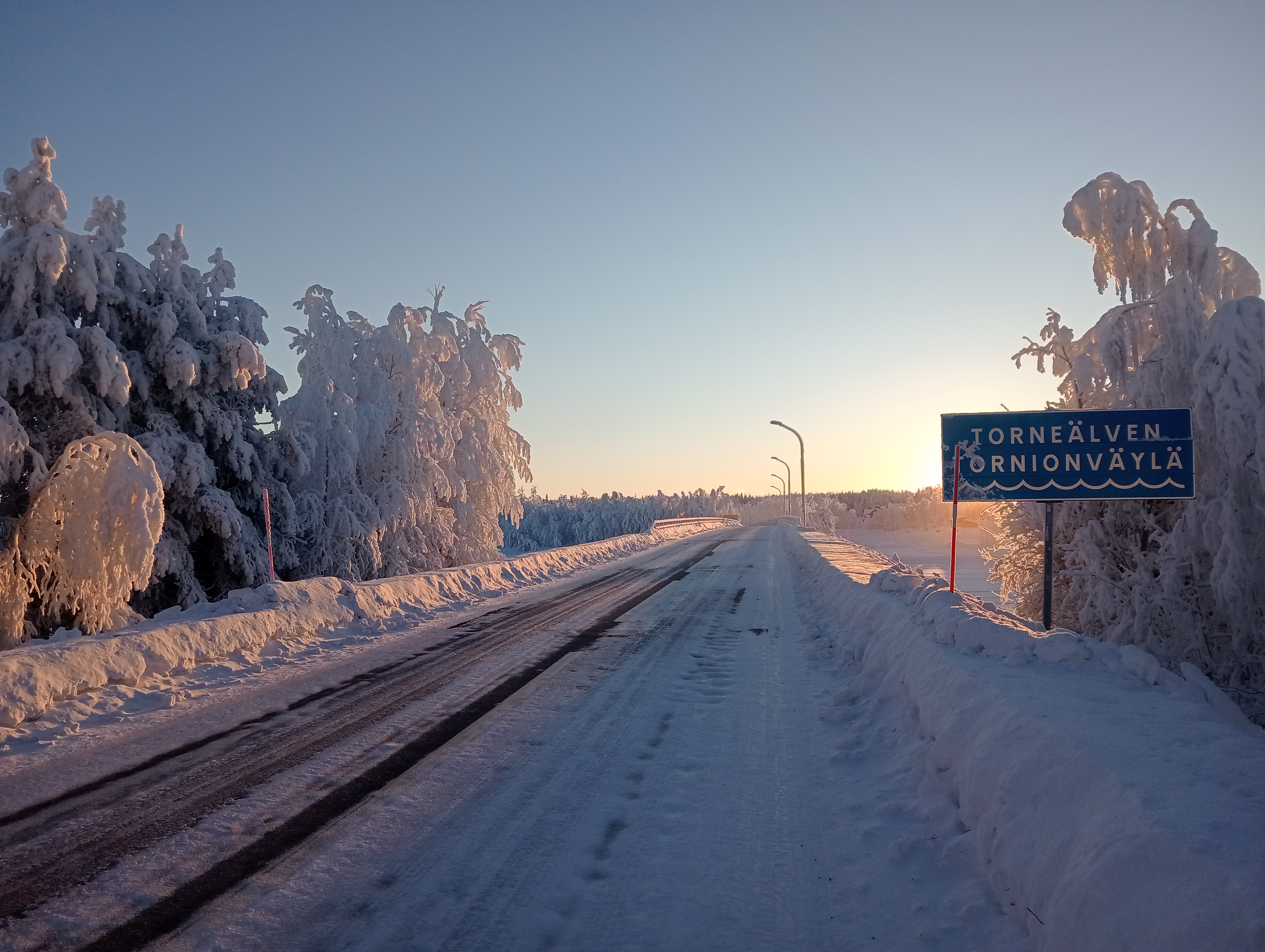
But until then, people sometimes do commute. No such luck that several systems in my car, including heating and ventilation, broke down during the cold weeks, making the car risky to drive, as the windshield was freezing from the breath air in seconds, forcing me to stop the car and scrape it from inside to be able to see the road. Even a relatively short journey of 50 km to the nearest mechanic became something serious.
There are perhaps three things in extreme demand, and incredibly hard to get, in Northern Sweden: housing, dentists, car parts, and time slots in car garages. Plenty of services are hidden; you will not find anything on Google Maps, websites, or social media groups. You will not see signboards or any information display. You need insider knowledge about who does what, where, and how to get it. Waiting two months for a time at a car mechanic is completely normal. And when the cold hits hard, all plans are postponed until possible, until “I will call you in some days.” With a lack of public transport, accessing anything without a car is nearly impossible, and at those cold temperatures, biking or hitchhiking is also questionable. You get stuck until conditions change.
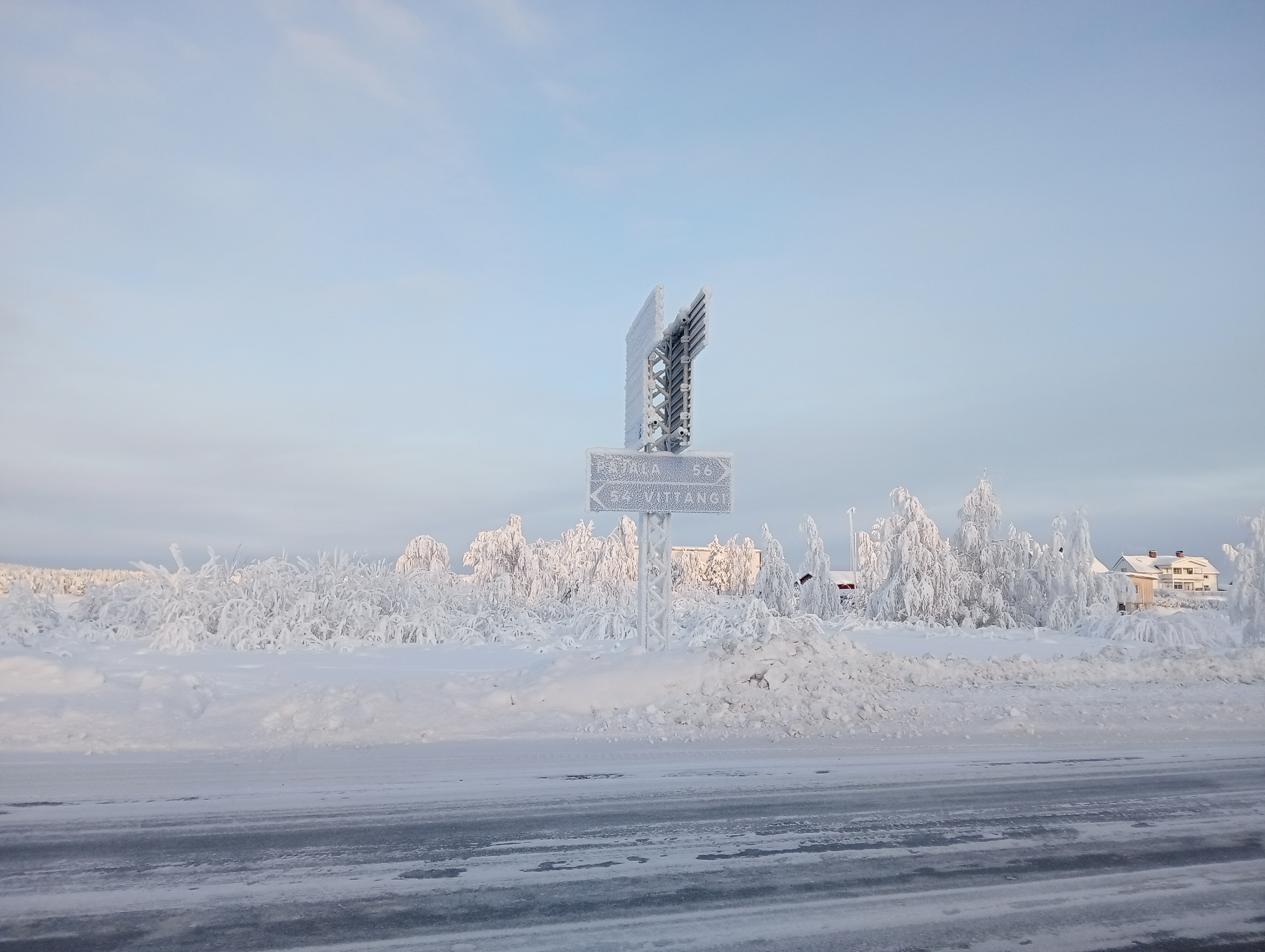
What Tornedalen showed me is that the cold changes social life. When movement becomes difficult, people tend to group together, following the herding instincts. You share the space. Everyone checks on one another, travels together, quickly asking also strangers where they are heading and what they are up to. In places built on dense social networks, anonymity has little room to exist. Everyone is, in some way, accountable.
To this day, many houses in Tornedalen do not lock their doors. Open doors are not only about friendliness, but about trust and preparedness in case someone would need to enter in an emergency. There are kiosks without staff, with open doors, where one enters, pays with a QR code, and takes what they paid for. That system also requires a lot of mutual trust and dependency, reminding me of customary hunting rules among many indigenous peoples of the north, including the Izhma Komi, where open doors and trust meant social justice and including or excluding someone from the hunting community for breaking the rules. Isolation does exist, but it is experienced collectively.
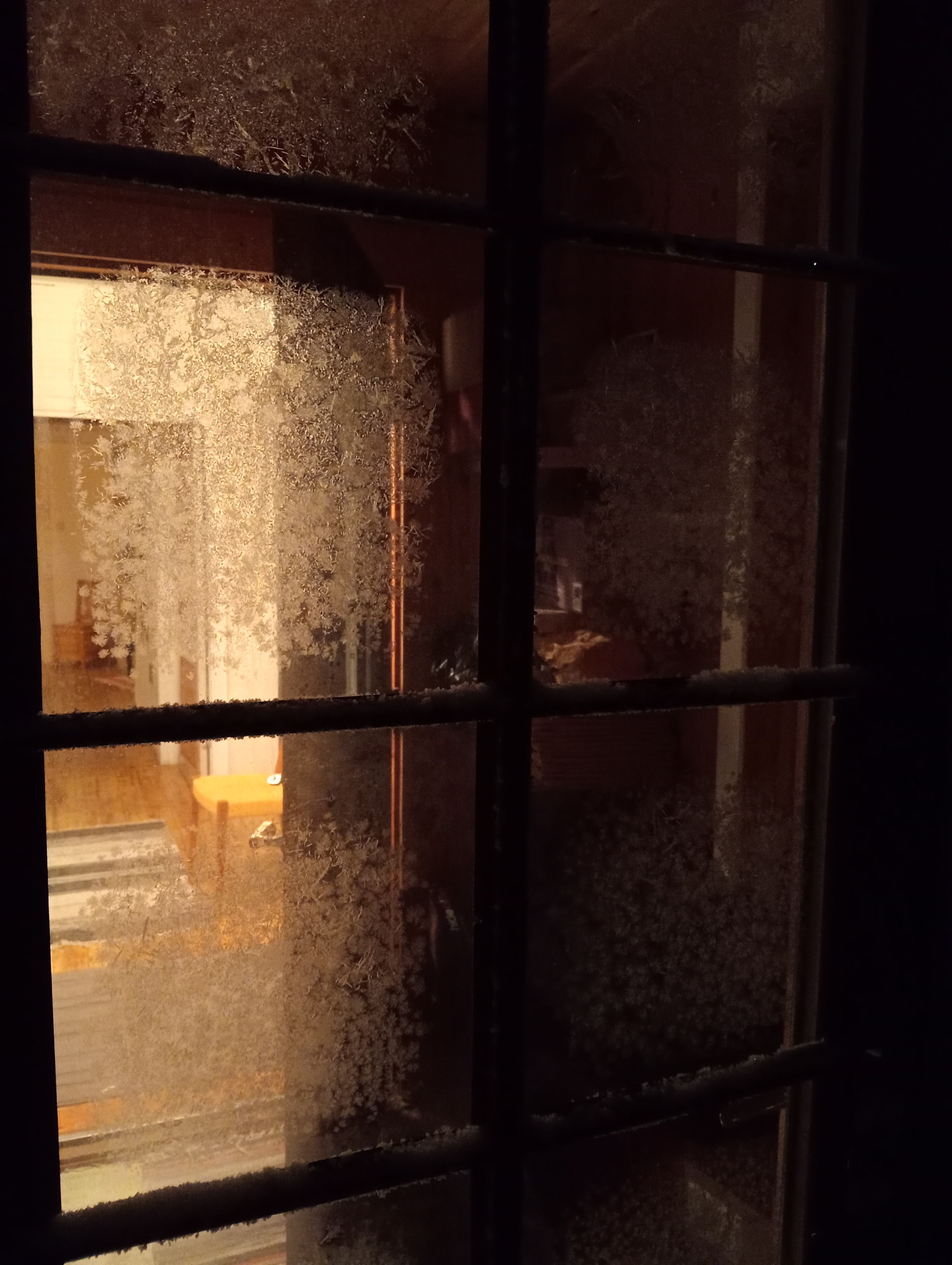
As I drove to the car mechanic, I started counting—not kilometers, but seconds—until the next parking spot along the road, in case of emergency. Between every 42 to 60 seconds at the speed of 100 km/h, there was a bay. But there were very few settlements or houses along the way. Many clearly abandoned.
Along the roadside were the remains of reindeer or moose hit by cars or trucks. Their bodies were broken and completely frozen, held in time and place by the cold. Decay had stopped; the impact was preserved in stillness by the cold. It was a powerful reminder of what cold can do. It stops things.
But cold also teaches patience, and respect for limits. It reminds us that not everything needs to happen now. In a world increasingly driven by speed, productivity, and constant availability, extreme cold in an isolated village offers a different lesson. Cold freezes time, and in doing so, it reveals that time was never ours to manage in the first place.
 Arctic Anthropology
A beautifully written ethnographic invitation to step back for a moment and take a deep breath. Inviting deeper reflections on the anthropology of the cold and the anthropology of time. As a reader with similar experience I can feel between the lines the challenges that this winter brought to the author. These challenges are one important half of the anthropology of the cold. And if we want to understand how societies function in a cold climate, we need to understand that aspect. The other half is the opportunities that the cold holds. The ways in which people make use of the cold in their everyday life, and the benefits that the cold affords to them daily and on the long run. This was the starting point for our recent book “The Benefits of the Cold and Domestication” (see a previous blog entry). There we show that the cold affords a specific human animal partnership that leads to very sustainable and resilient livelihoods, where the organisms even change genetically.
In this text, Karolina also shows what the benefit of the cold is for preparedness: it leads to a level of trust and reliance on mutual help that may not be necessary in more temperate climates or bigger settlements any more. That is an interesting aspect to think about too: does the cold make people more crisis-prepared in general? This is one aspect we are going to explore in a grant we are just about to start, and will be hopefully reporting on here regularly. The outcome of that will be a contribution to the anthropology of preparedness. We envision that from the Arctic we can significantly contribute to theorizing how everyday preparedness for crises is determined both environmentally and culturally. Karolina’s text is thus the first outcome of this way of thinking, and marks the start of our work on this topic. Thank you.