It’s a time when the Winter Olympics captivate so many of us, and we’re glued to our televisions, heartspounding with excitement. I, too, watch the winter sports competitions, feeling my pulse quicken as I count along with the judges: 1, 2, 3…
But I don’t count the athletes’ points; I count the beads, stringing them on a string: 1, 2, 3… I’m making beaded earrings, and it’s a new and exciting project for me.
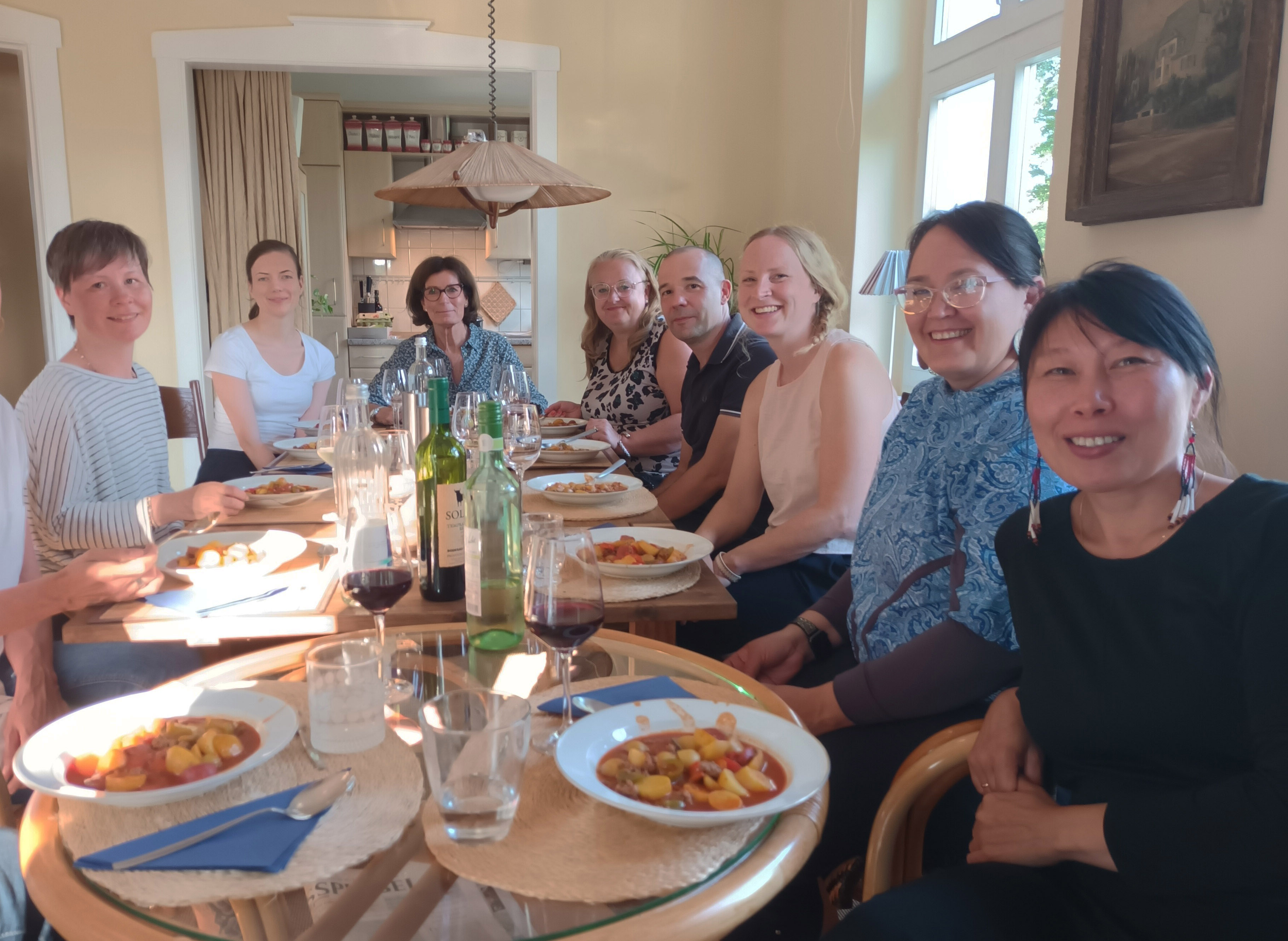
It all started when I met my colleague Charleen Fisher during the meeting of Members of the Co-create network at the Foundation for Siberian Cultures for a three-days workshop in the German town of Fürstenberg. She brought me a gift—beautiful beaded earrings made by a local artisan from Alaska. When I put them on, I realised they were a part of me and a part of my identity as a person from the north, for whom the Arctic is home. A photo of the meeting is taken from https://dh-north.org/dossiers/workshop-co-create-network/en.
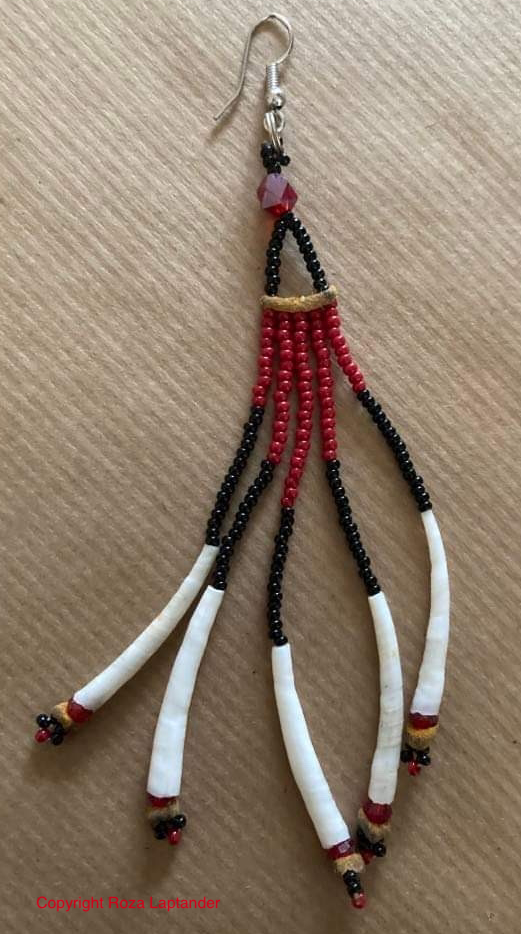
It so happened that I lost one of my earrings somewhere in Hamburg while I was working at the University there. To be honest, I was very upset, as such a unique piece of jewellery was impossible to buy or order anywhere else. I attached the remaining earring to my house key and left it there.
One day in June 2025, I went to Alaska. There, I found myself in a village of indigenous people in the region. Upon arrival, I stopped into the store to buy something for breakfast. Honestly, St. Michael is surprisingly reminiscent many of our northern Siberian villages. Even the people here look much like people I know in my homeland. I won’t tell you how to get here. I won’t tell you about the houses, streets, and sidewalks—that’s a whole other story.
I’ll just say that I came to Alaska to learn more about how the local population herds reindeer and what forms it takes, and I was interested in many aspects of the lives of the residents of St. Michael. So when I went into the store, I wasn’t surprised that everything there was very expensive, since almost everything is imported from the mainland, just like in Siberia. What surprised me was a small corner where local artisans were selling their wares. I chose beaded earrings as a gift for my daughter and asked the saleswoman for the artisan’s name and how to find her. She gave me Elizabeth’s phone number. I called her the next evening and asked if she had more earrings. She arrived with one pair, but it wasn’t quite what I wanted. Then I asked Elizabeth if she could make me new earrings from the ones I’d lost. In the end, an Alaskan artisan made them.
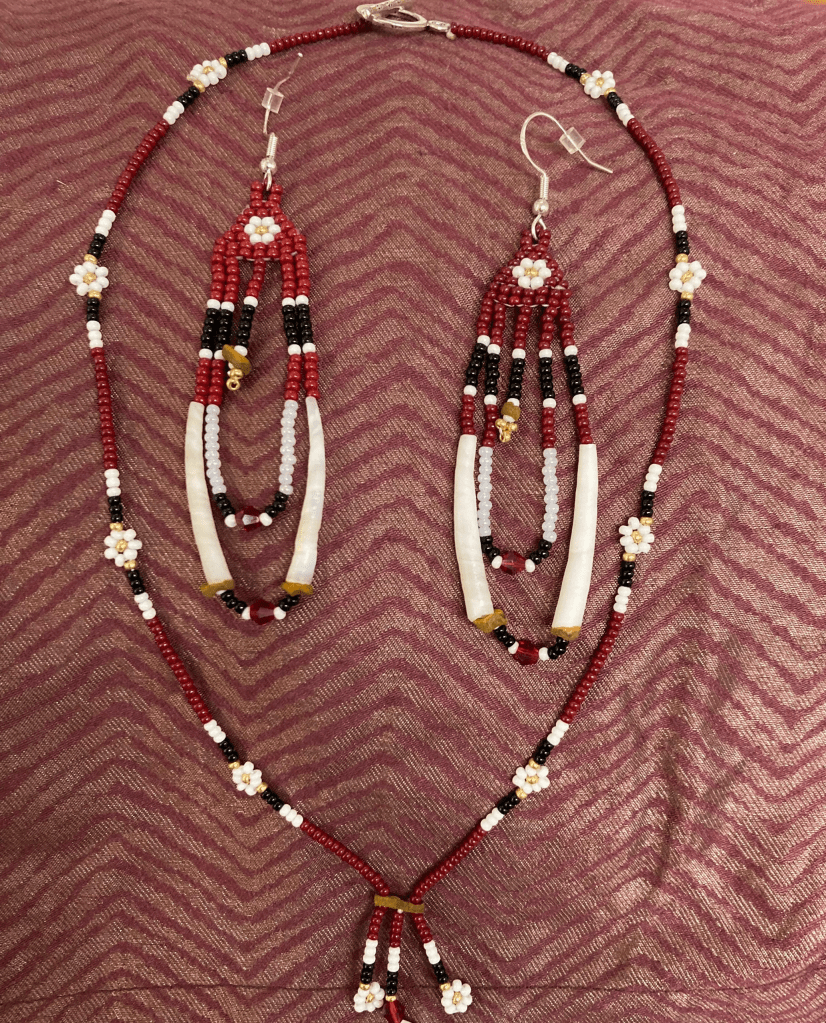
Unfortunately, Elizabeth didn’t have the same material, but she promised to make something new from my only earring. I was thrilled. When Elizabeth showed me my new earrings a couple of days later, I was simply amazed by her skill and artistic flair. She made not only new earrings but also a new necklace. It turned out to be a stunningly beautiful beaded set.
Beading is popular not only in Alaska. The tradition of decorating clothing with beads is also widespread among many peoples of Siberia. However, each person has their own traditions and beading techniques. Traditionally, the Nenets women also decorate their traditional clothing with beads. The art of clothing decoration has deep roots in the history of indigenous Arctic peoples. The practice of making, gifting, and wearing beaded items connects them to families, history, and culture.
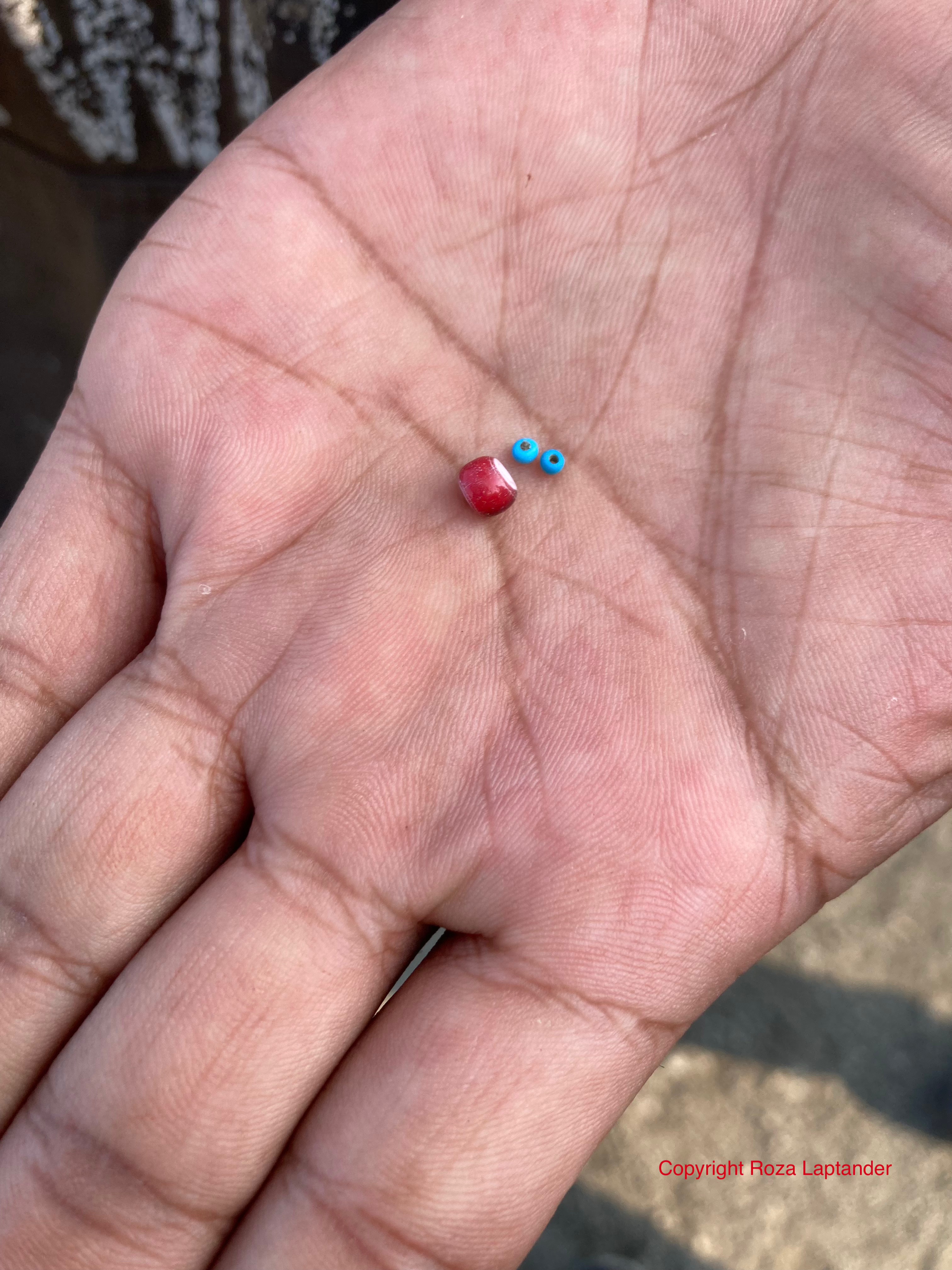
When non-indigenous traders arrived in the Arctic region, they brought with them manufactured goods such as knives, teapots, and colored glass beads. Like these old ones which Freddy found near the Mont Saint-Michael Bay, Alaska.
The advent of mass-produced beads meant that pattern creation became easier. This also gave indigenous women a greater choice of colours and greater flexibility in design, as beads could be easily placed to create curved lines and circles. Perhaps this is why beads have become a common element of indigenous clothing in many countries around the world.
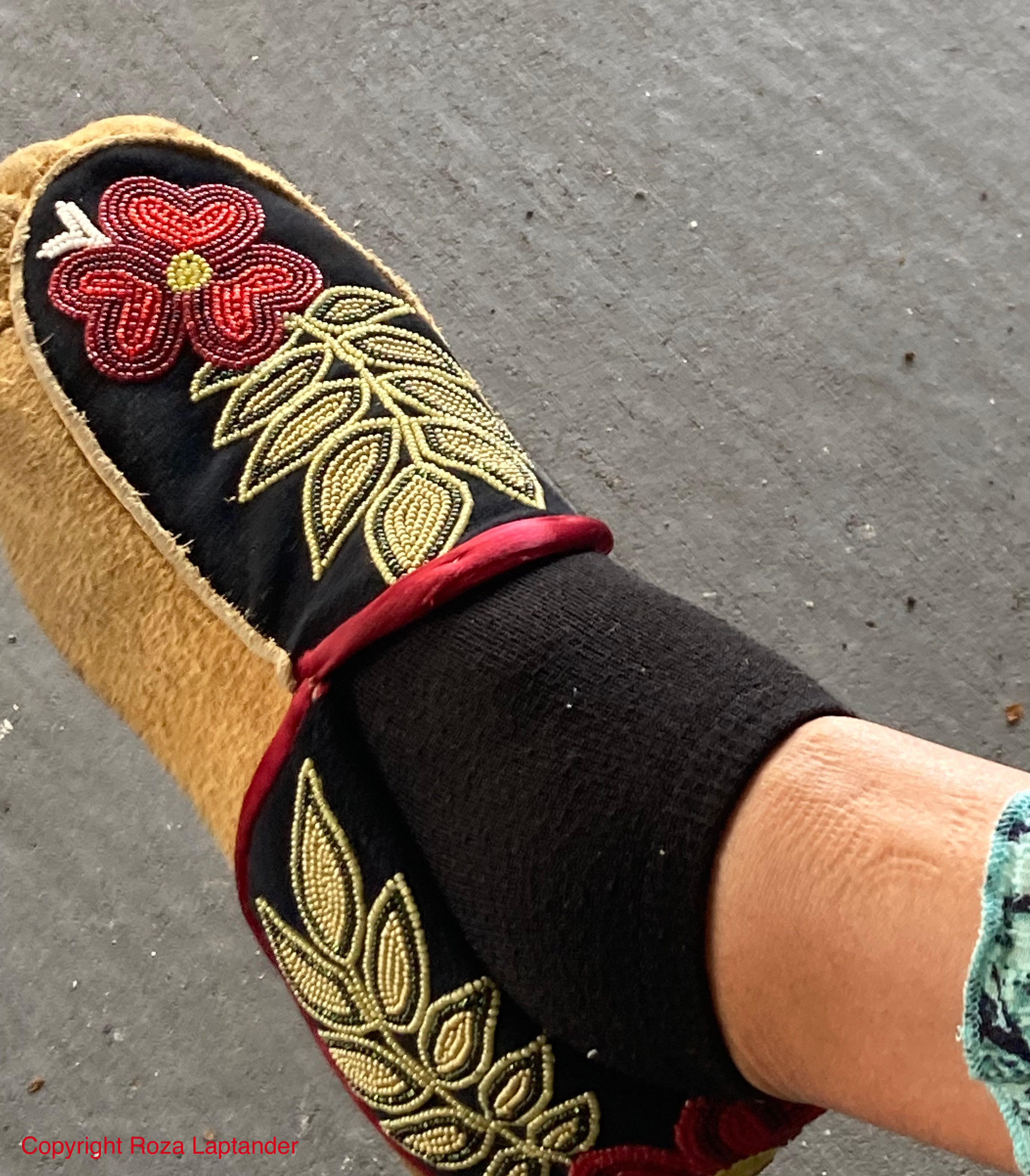
The process of beading is slow and deliberate. It requires patience and attention to detail. Each bead is strung on a fine needle and sewn on by hand. To do this work well requires practice and skill. Complicated pieces can take weeks or months to complete. Traditionally, beadwork was passed down through generations, from one woman to the next. Because beading was traditionally a woman’s craft, today beading continues to be a vibrant cultural practice in many parts of the Arctic, and local indigenous artists are recognised for their creativity and craftsmanship.
When I received my earrings in St. Michael, I thought: Why not try making my own? Especially after seeing beautiful beaded earrings on a worker at the Nome airport – earrings I couldn’t buy anywhere. I can confidently say that it was this dream that inspired me to watch numerous online videos about how to make beaded earrings. I purchased the necessary materials, and these dream earrings were born.
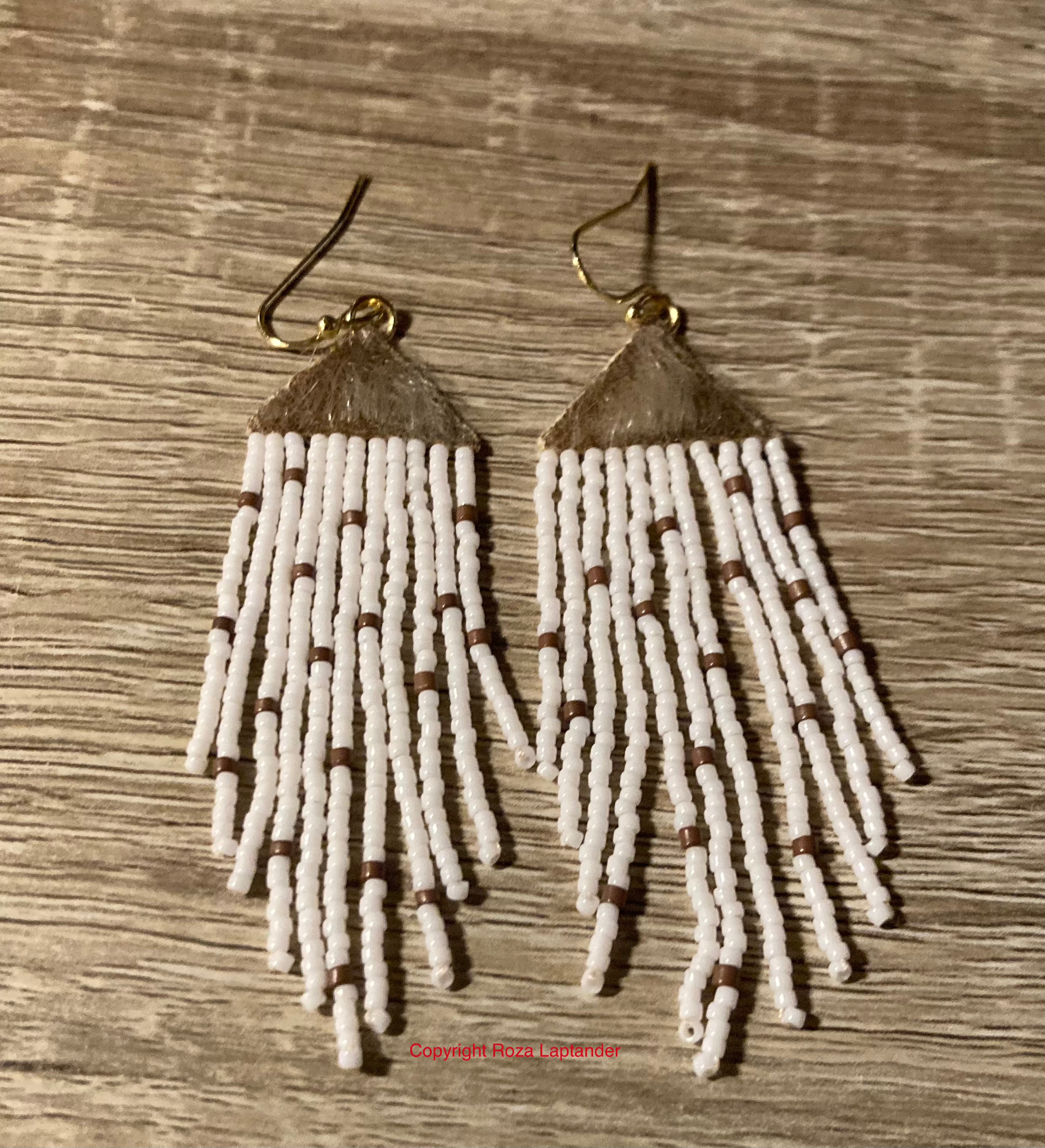
I am so grateful to the indigenous women of Alaska, Oklahoma, and Greenland, especially Elizabeth, for their love of beads and beaded earrings.
 Arctic Anthropology