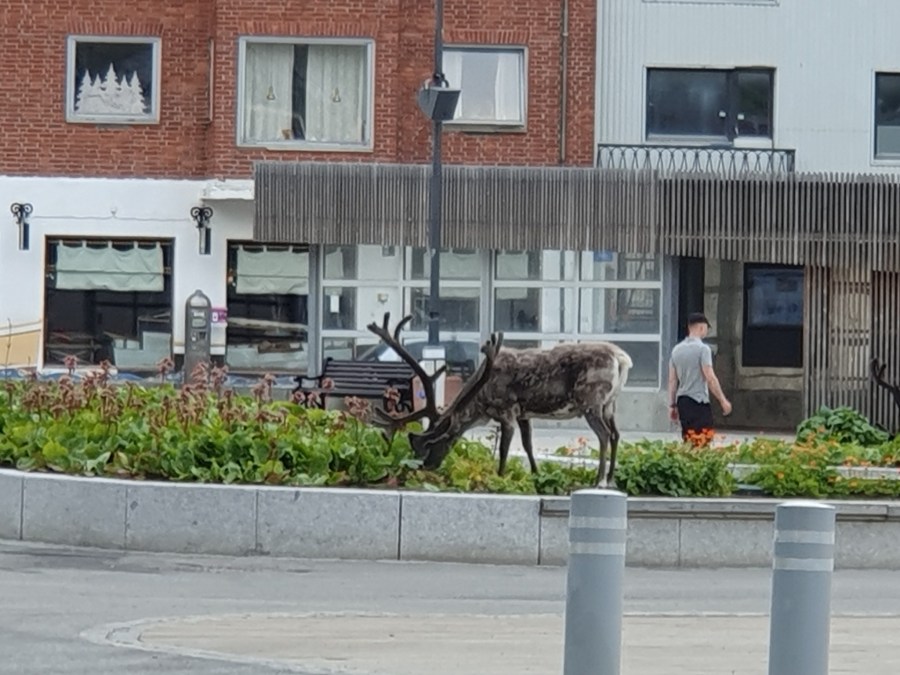
Across the Arctic, reindeer are more than just animals—they are powerful symbols of the region. Whether domesticated, semi-tame, or wild, they roam throughout Fennoscandia, the Russian North, and parts of North America. In more accessible Arctic destinations, they often feature in tourist safaris and curated experiences that seek to capture the vibe of northern wilderness. But beyond this imagery, reindeer herding is not simply an occupation—it is a way of life. Passed down through generations, it is something one grows into rather than chooses in a conventional sense.
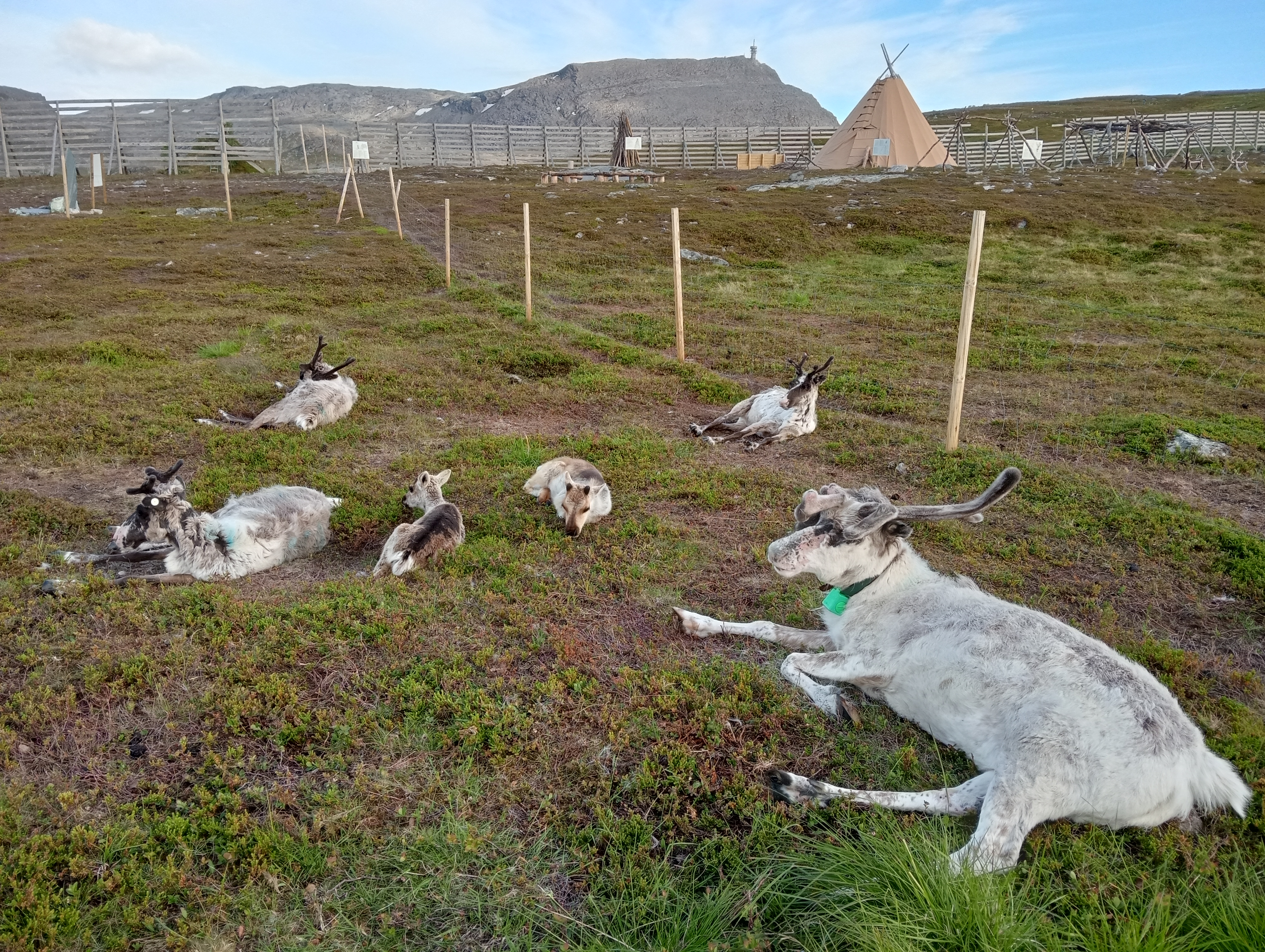
Salen Hilltop, where visitors can see Sami turf huts and some unbothered reindeer inside a fence.
Reindeer are valued for their meat, hides, and cultural significance. Historically, they were crucial for transport and survival in harsh northern landscapes. Today, herding areas are often subject to special regulations or protective frameworks. In most parts of the Arctic, reindeer are treated with care and respect.
Yet in one of Norway’s northernmost cities—Hammerfest—this relationship looks markedly different.
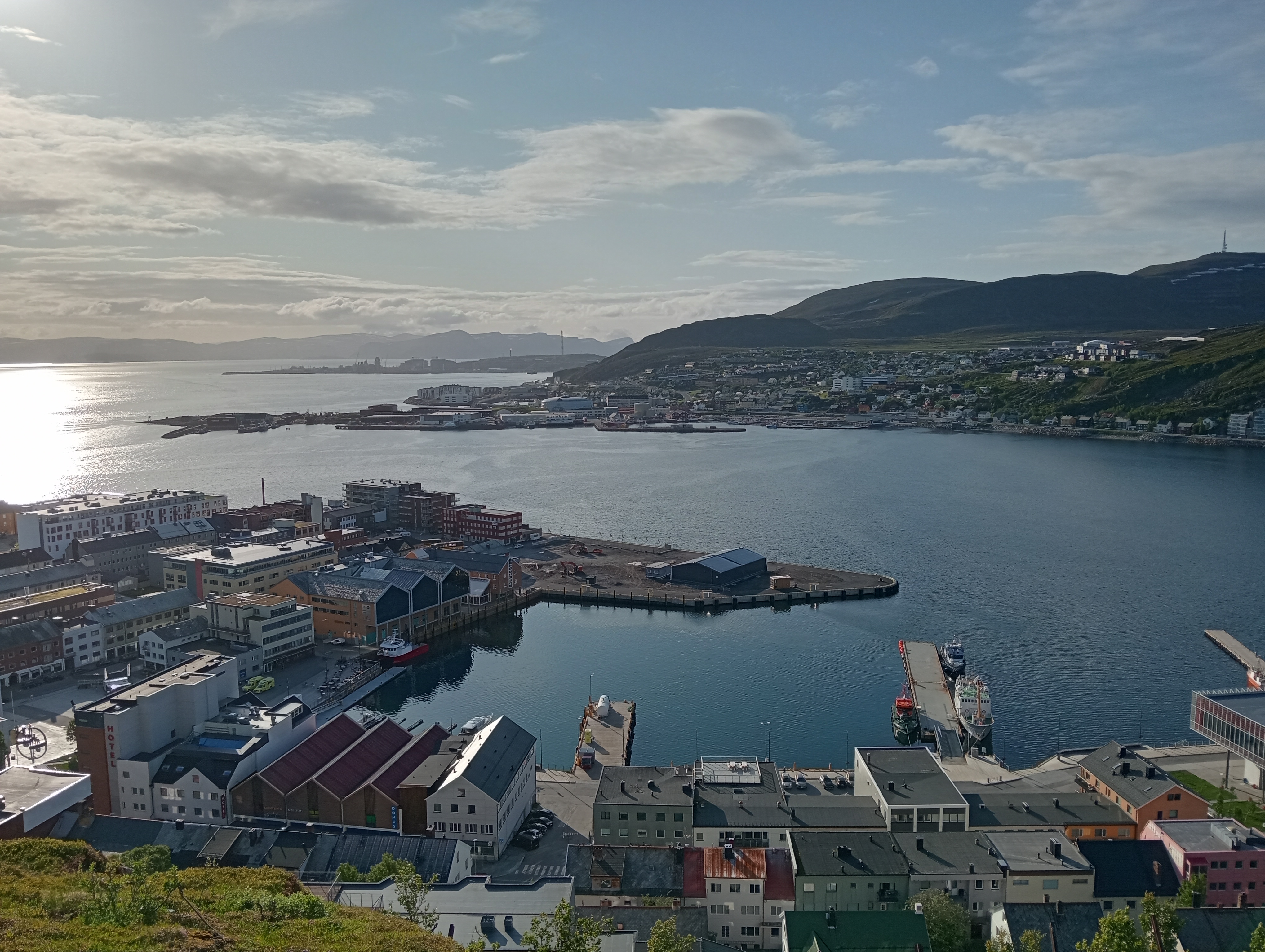
Hammerfest, located at 70.7°N on Kvaløya island, has long claimed the title of the world’s northernmost town with more than 10,000 inhabitants. Officially recognized in 1789, it is also one of the oldest towns in northern Norway.
Once known for its excellent ice-free harbor despite lying far north of the Arctic Circle, Hammerfest has endured hurricanes, devastating fires, and total destruction during the Second World War. It has rebuilt time and again. Today, it is a place where heavy industry, large-scale tourism, and reindeer herding meet—often uneasily.
Kvaløya forms part of an official Sámi reindeer herding district and has long served as a summer grazing area. While reindeer are no longer permitted to enter the urban zone itself, the surrounding areas retain traces of a deeper history of coexistence. Place names like Reindalen (‘the Reindeer Valley’) and Boazovággi (‘Reindeer Mountain’ in Sámi) gesture to longstanding relationships with the animals. Yet even these names are shifting—Reindalen, for example, is now often called Prærien, a name that evokes settler frontiers more than shared histories.
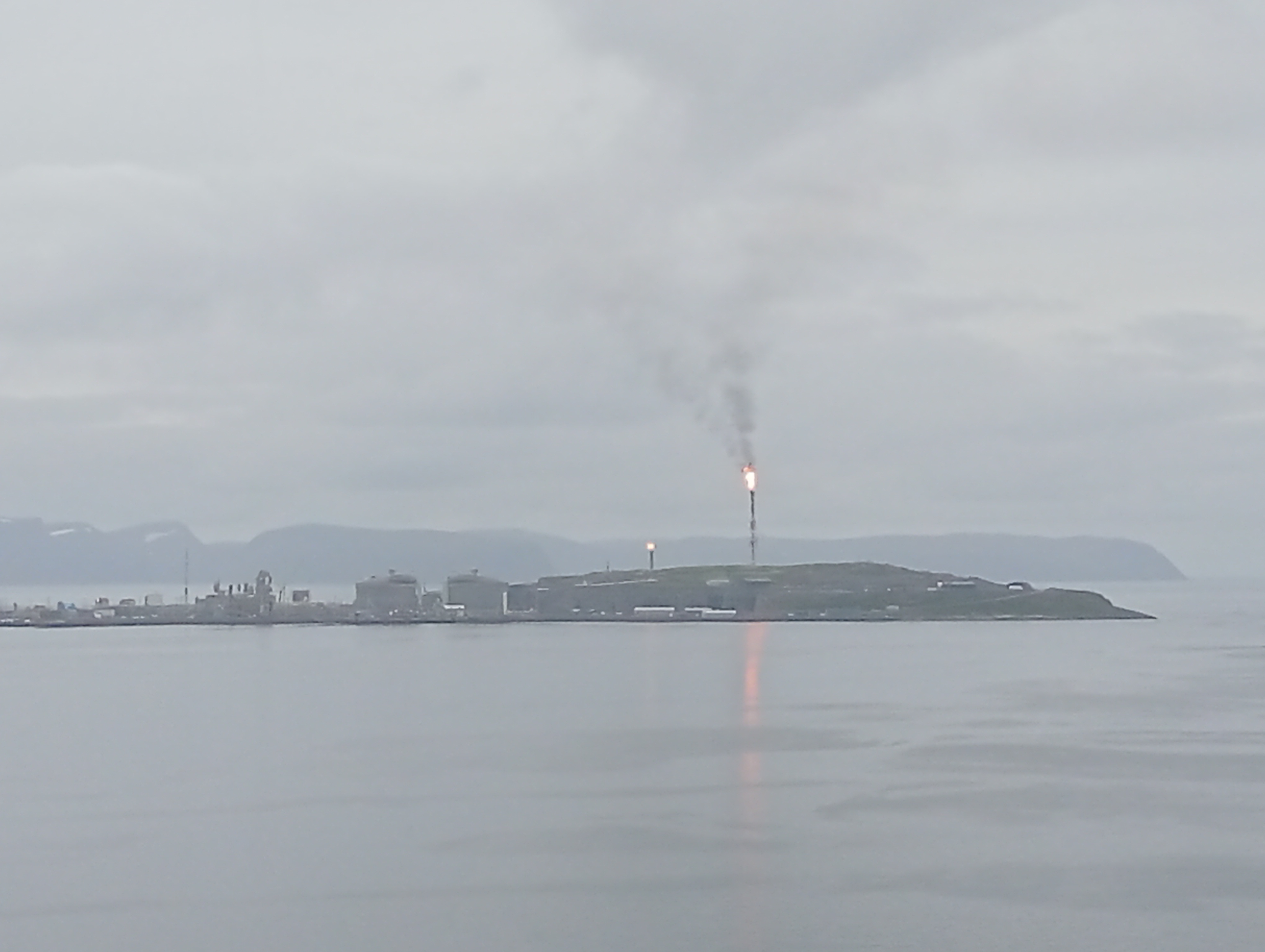
Tensions between reindeer presence and urban life are not new. Every summer, reindeer migrate from inland winter pastures to coastal grazing lands, many following ancestral routes that lead them through or near Hammerfest. These movements now intersect with industrial infrastructure, dense traffic, and expanding residential areas. Since the development of the Snøhvit gas field and Melkøya processing plant, urbanisation has intensified, heightening conflicts over land use, access, and regulation. Mining and related industrial activity add further environmental strain, disorienting animals.
While tourists are often delighted to encounter reindeer wandering through town, many local residents express frustration. Complaints frequently focus on traffic disruptions and the mess left behind by the animals—dung, urine, trampled gardens. For reasons of hygiene and safety, the municipality invested in a a fence designed to keep reindeer out of the urban area. Yet this has not proven effective. Reindeer continue to find their way into the town via road crossings, despite electrified grates meant to deter them. Herding them back out has become even more difficult as a result.

Public sentiment can be openly hostile. In some cases, children have been seen throwing stones or darts at the animals—sometimes, reportedly, with encouragement from adults. Online forums frequently reflect anger and resentment. Many call for harsher measures and demand accountability from the herders. The idea that a few individuals should maintain constant control over hundreds or thousands of animals—especially across fragmented, increasingly urbanized terrain—is often taken for granted. Yet this expectation can be deeply unrealistic.

Facebook posts on a local community group.
“Once again this year, I didn’t get to enjoy my lush summer flowers in peace. Just the day after we left for vacation, those damn reindeer came and destroyed everything.”
“I get so angry and frustrated. The situation with all these reindeer is ruining our living environment. A solution must be found!”
“I find it unbelievable that the reindeer herders show so little concern for their reputation. There are far too many reindeer on Kvaløya. If the industry doesn’t take responsibility—for herd sizes, traditions, and movement—the problem will only get worse.”
“Not to mention all the droppings. Roads and gardens are a mess.”
“Maybe we need a proper reindeer count to verify whether herd sizes match the legal limits?”
Legal conflicts have followed. The municipality has taken steps to pursue legal action against the local Fála herding district, aiming to recover costs related to reindeer incursions and environmental damages—despite the clear limitations of the fencing system and broader structural challenges. These legal proceedings have the potential to deeply affect the future viability of reindeer herding in the area and strain relationships between municipal authorities and herding communities.
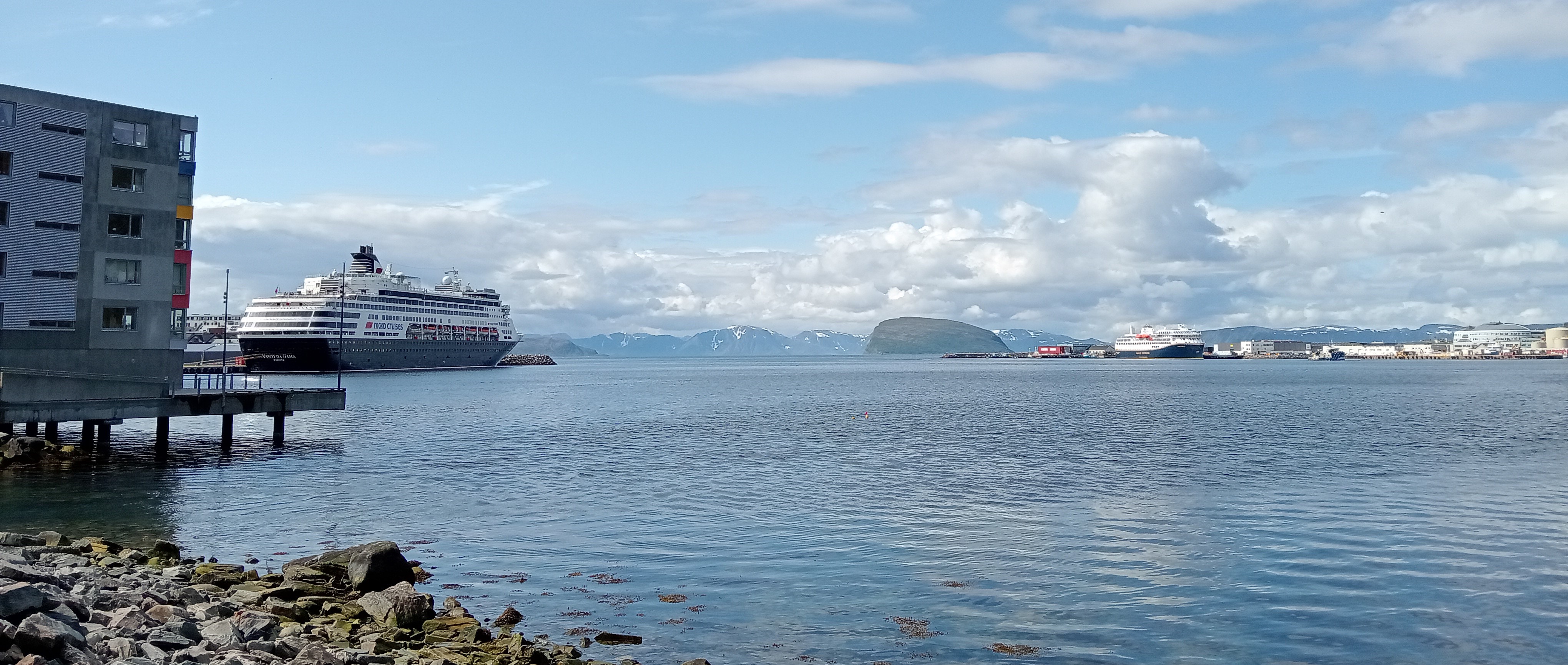
Hammerfest today is a complex, shifting place. It is a hub of energy development, a port for cruise ships and supply vessels, and a city layered with the histories of Sámi, Kven, Norwegian, and more recent migrant communities. These groups have coexisted—often tensely—for centuries, shaped by the legacy of Norwegianization and cultural assimilation. The recent Truth and Reconciliation Commission has begun to address this history, opening space for dialogue and repair.
At the same time, new dynamics are taking shape. Migration from Eastern and Central Europe has brought additional labor to the industrial sector, but these workers frequently encounter prejudice and social exclusion. Tourism is booming. Traditional livelihoods—like fishing and herding—now share the landscape with global industry and urban expansion. Sometimes, they clash.
Hammerfest is, in many ways, a condensed version of broader Arctic tensions: between growth and tradition, mobility and control, infrastructure and ecology. The reindeer, moving along ancient paths through unfamiliar terrain, make these tensions visible—sometimes in the most ordinary places: a street, a garden, or a fence that doesn’t quite hold.
This fieldwork was conducted in the framework of EnJUSTICE research project, Nordforsk.
 Arctic Anthropology
Very interesting and captivatingly written post, Karolina, thank you!
The topic you raise connects also well to one of the big problems tackled in mobile pastoralism research worldwide, which is the contact between the animal husbanders with their herds and the farmers who cultivate fields: it is not typical to the Arctic only that animals roam and then walk into people’s fields and garden, and either trampling or eating the resources there. I think at the heart of this lies the tension between a sedentary / settled livelihood and mindset, as opposed to a nomadic / or at least mobile one.
The literature on this is mostly about conflicts in areas where people actually can grow plants on fields, and most of it written by our colleagues who did fieldwork in sub-Saharan Africa (e.g. Musa Adam Abdul-Jalil 2023 in Gerted et al (eds), or the new volume edited by J. Shola Omotola, 2025, Springer). Whereas your Hammerfest field site is so far north that this adds a new dimension: the same conflict even arises in an area where people do not even farm on fields, because of its Arctic latitude and climate. Fascinating!