The tradition of midsummer celebrations is widespread across many cultures, yet it is particularly strong among people of the northern and eastern Europe.
Not an exception are Izhma Komi people, indigenous population of the North of the Komi Republic (Russia). These days, Izhma people live all across the Russian North; from the Kola Peninsula in the west to Yamal Peninsula in the north and Khanty-Mansi Autonomous Okrug in the east.
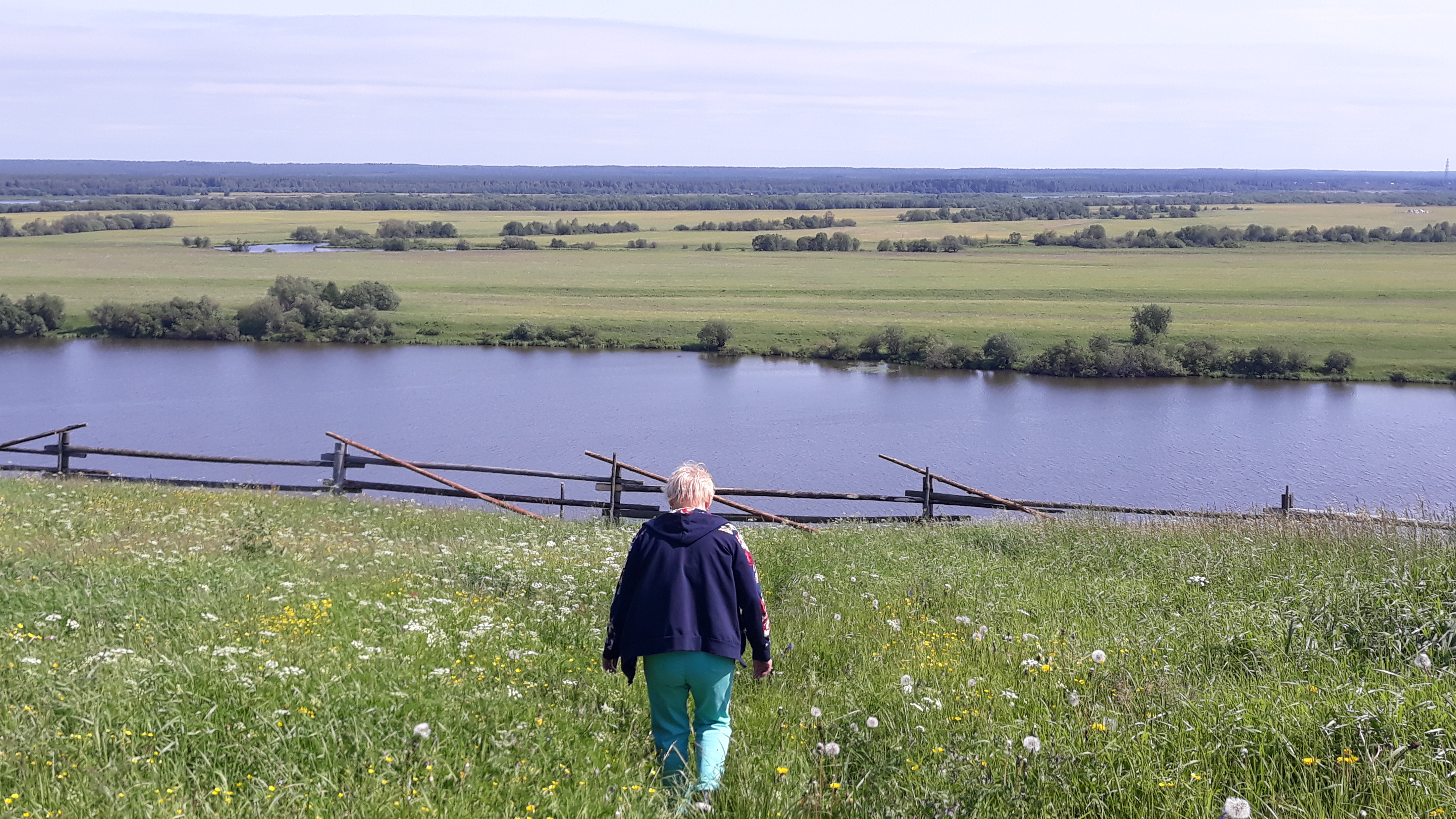
The history of Izhma Komi ‘Lud’ festival dates back to pagan times. It has been held on the last Saturday of June, just before the start of the hay making season, reflecting spring-to- summer transition. That is the time when, as it was believed, nature reaches its peak, the herbs absorb all of the juice, have miraculous powers, and the water in the river becomes healing. In the earlier days, Izhma Komi would gather in the meadows along the Izhma river and light up bonfires. The celebration lasted from the evening until the sunrise, when the border between the human and spiritual worlds is open.
Even though, in 1937 ‘Lud’ was banned for the whole Soviet period, other forms of Izhma Komi ethnic distinctiveness were present across the settlements; mainly female traditional costium (sarafan), handicraft, cuisine, and widely spoken Izhemsky dialect of the Komi language.
The first attempts to revive ‘Lud’ were undertaken in the late 1980s. One of the main persons responsible for the festival revival noted in the conversation with me:
as long as people are alive, the time cannot eradicate the old traditions. In the 1980s, elders, remembering the last ‘Lud’ were passing away. This was the last moment to save what started to be forgotten
In the remote villages of the Izhemsky district, several cultural workers, and ordinary village dwellers, were collecting pieces of memories of the elders and eventually recreated lasting two days festival.
The modern celebration ‘Lud’ is a vibrant, multifaceted, structurally complex expression of Izhma Komi cultural life. It is also the most awaited celebration in the region. For that occasion, Izhma Komi from other regions of the Russian North travel to their motherland, to meet or search for their relatives, visit the graves, and also to look for a spouse.
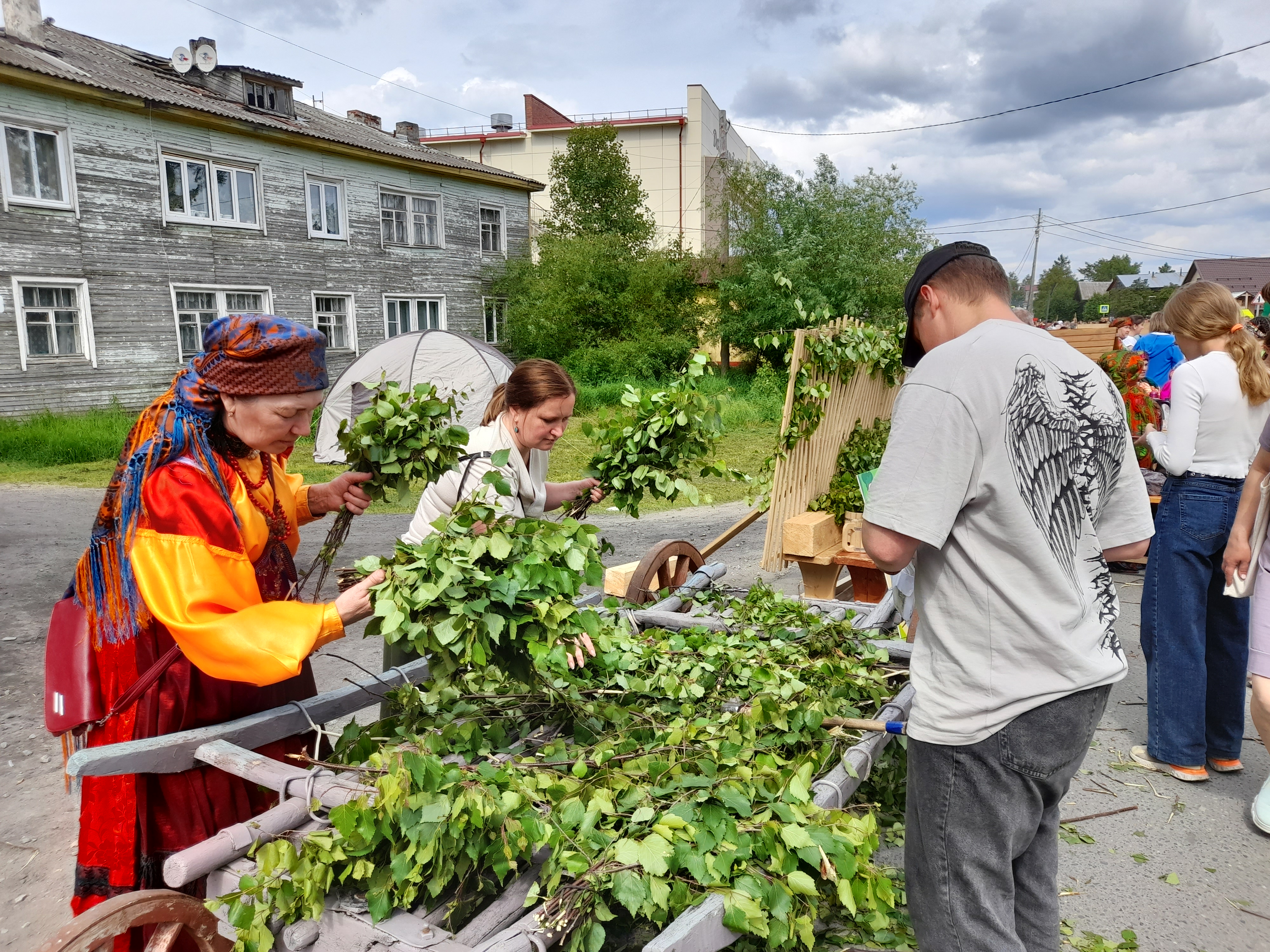
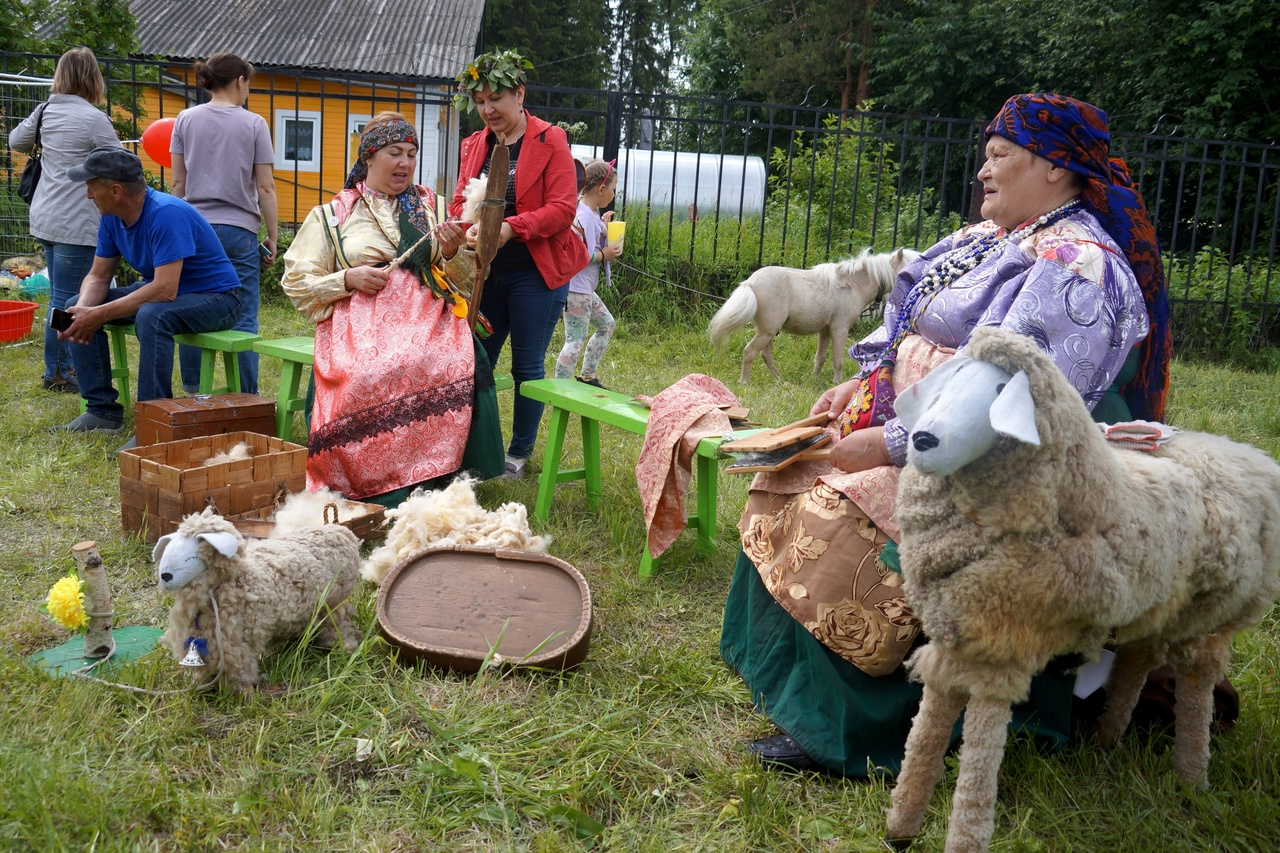
‘Lud’ festival has several parts; During the day, locals and visitors can enjoy the performances of Komi artists, participate in craft workshops, and buy local as well as less local souvenirs.
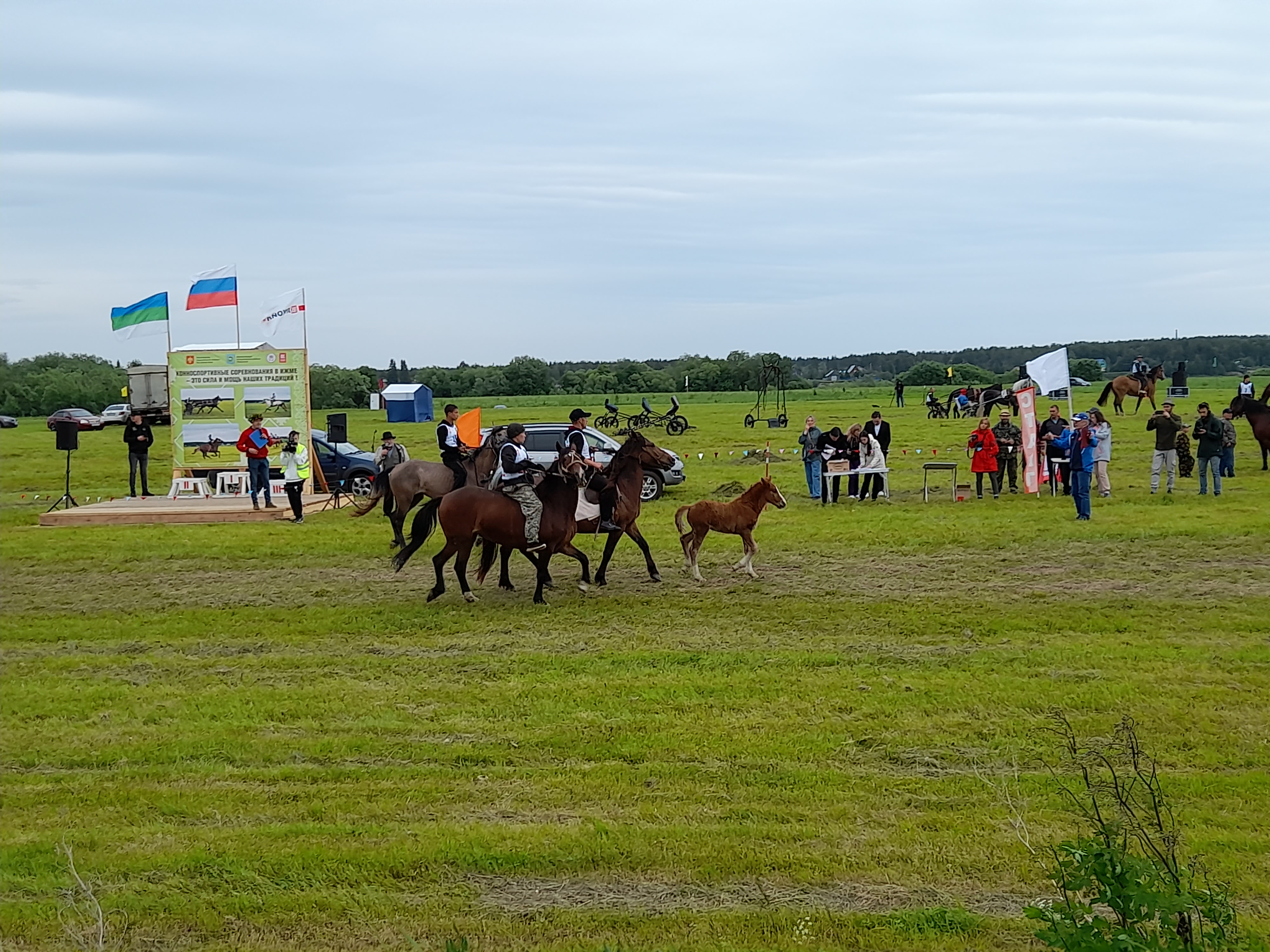
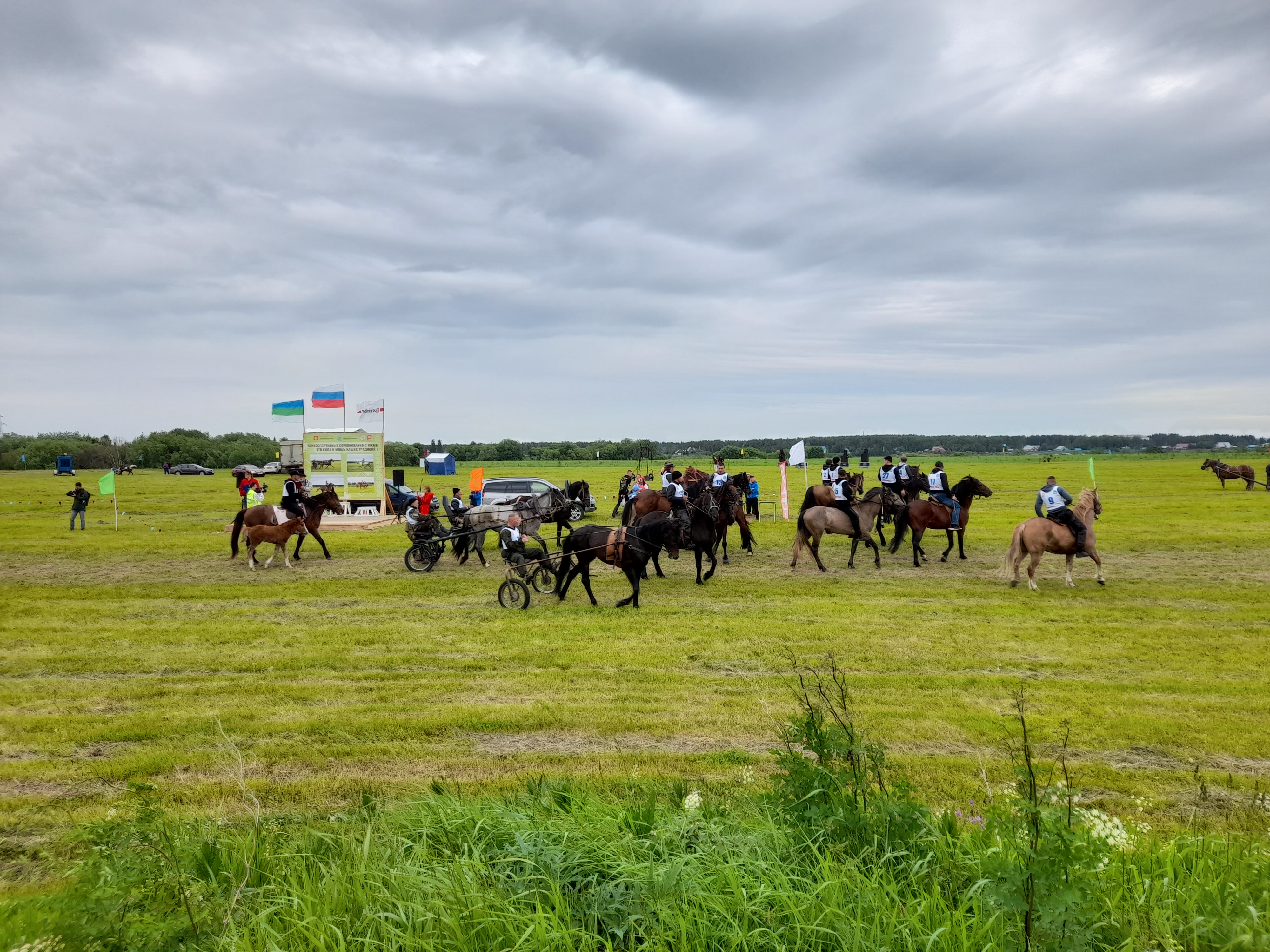
In the late afternoon, the horse races (known as gonki or skachki) start. The competition was born out of the tradition to drive a herd of horses through the meadows before the celebration to make the ground hard enough, for the people to gather. Horses, that take part in the competition are not professional racing horses. they are typically animals used for agricultural work and are only lightly trained for the race. Therefore, they may not always be eager to run or to stand at the starting line.
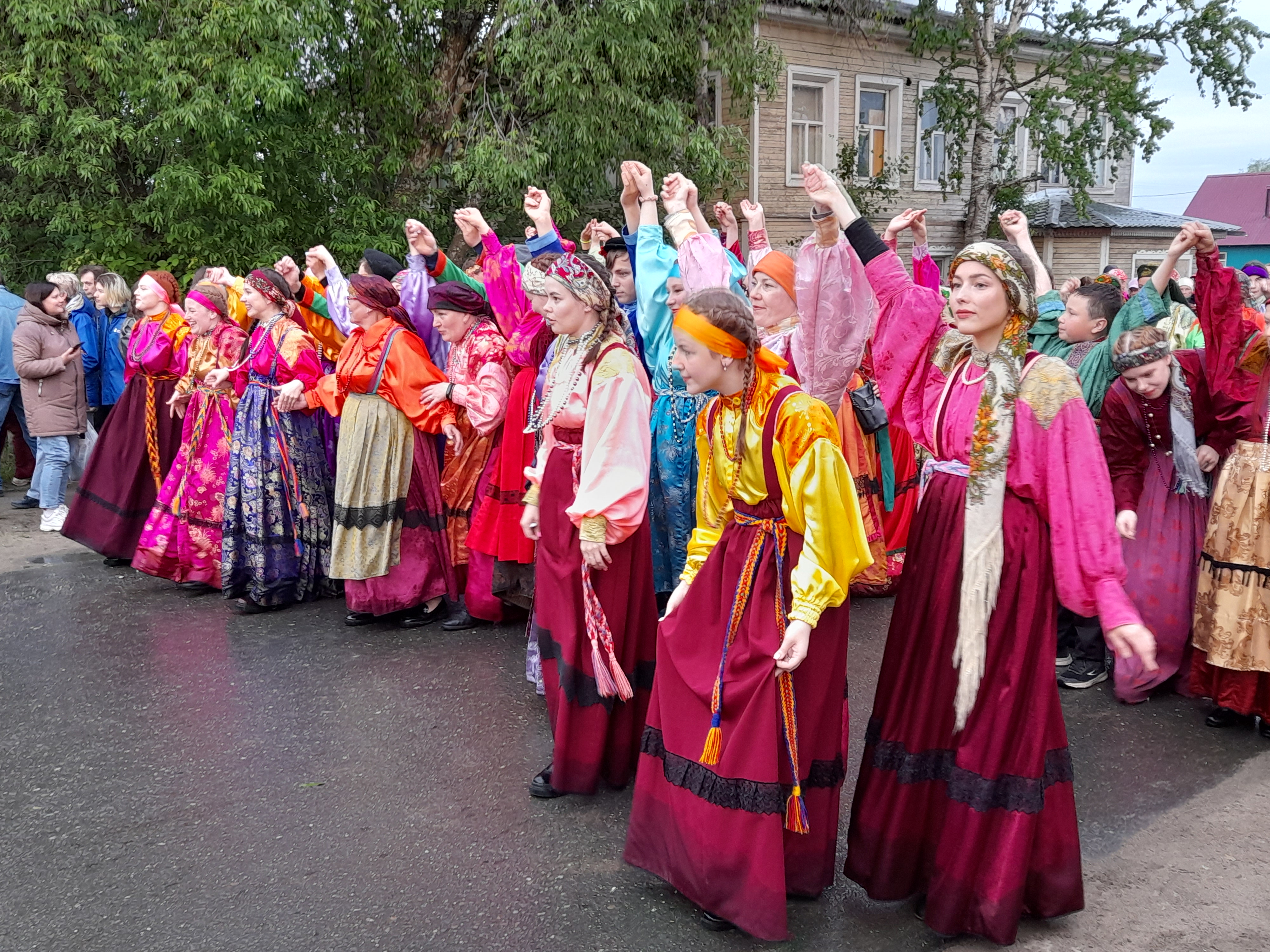
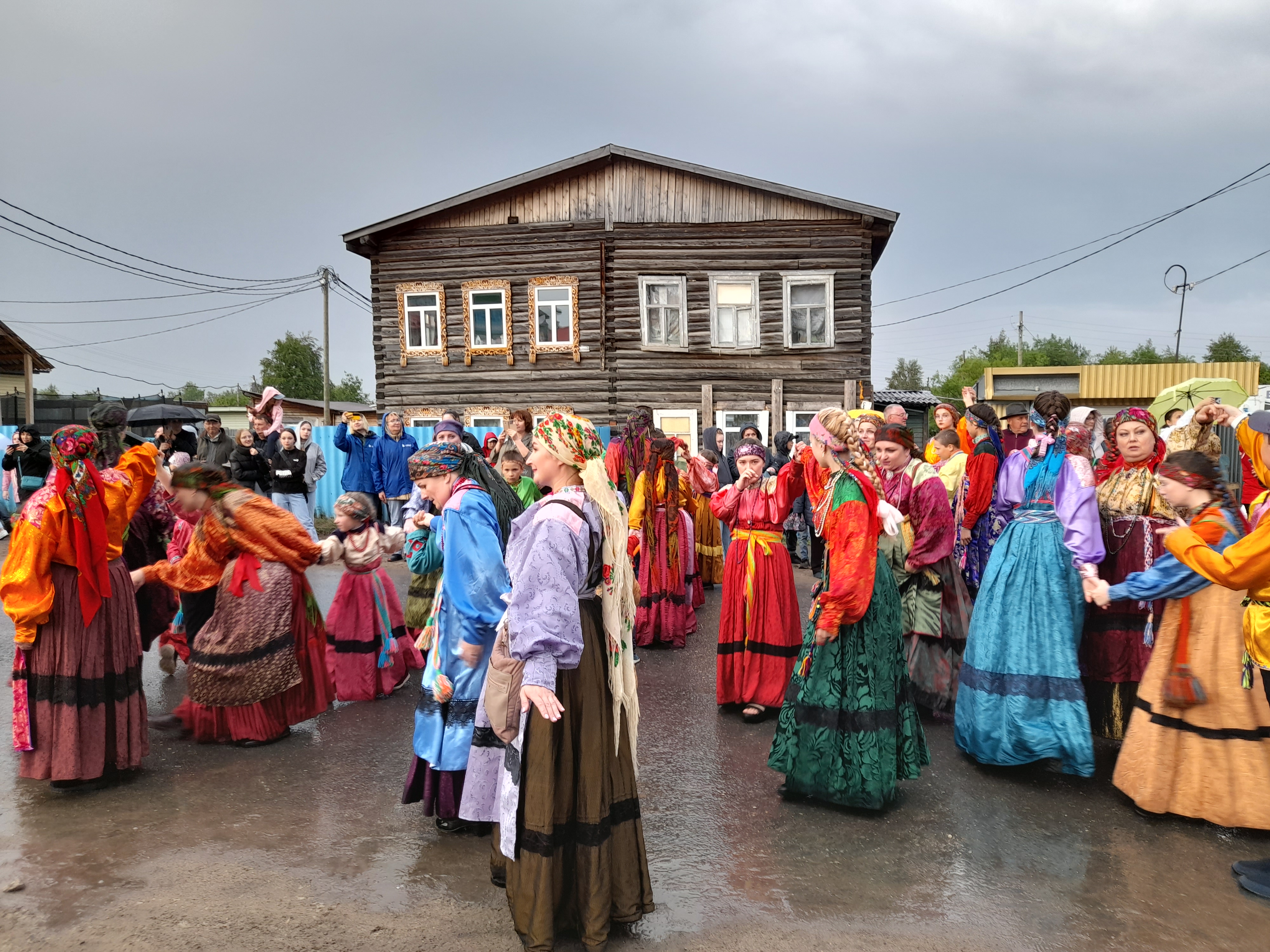
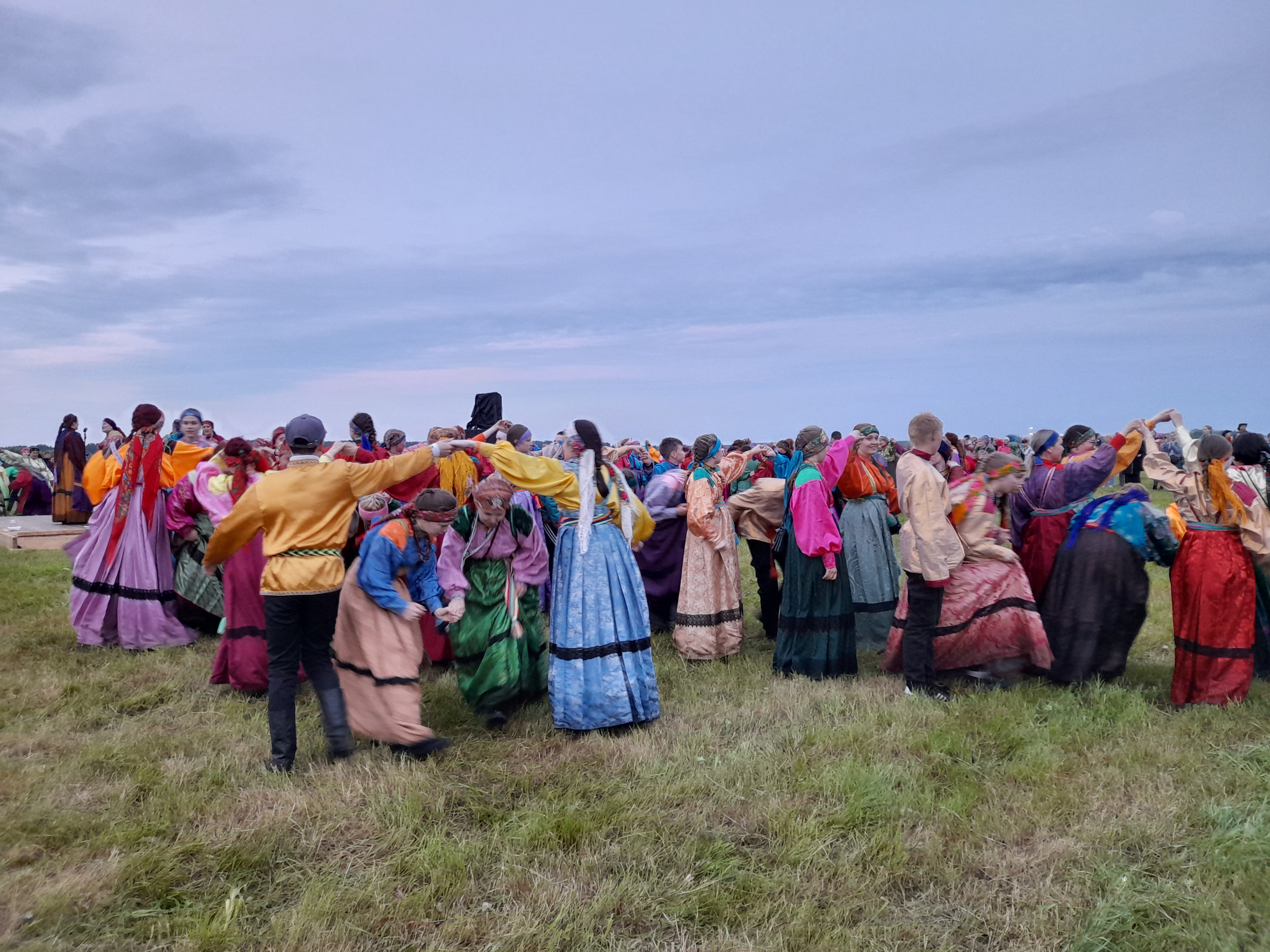
The actual celebration starts with ‘gates’ (vorota); chorographical figure in which local people dance and sing together continuing across the Izhma village up to the river bank. That is the main part of the celebration. It is not a staged performance, but is rather a surge of people who learned the figures beforehand and have repeated over the years. The choreographic cycle is a complex ritual that includes dance processions, round dances, and various paired hand connections, with participants passing under them as if through a gate. It symbolizes the departure for haymaking.
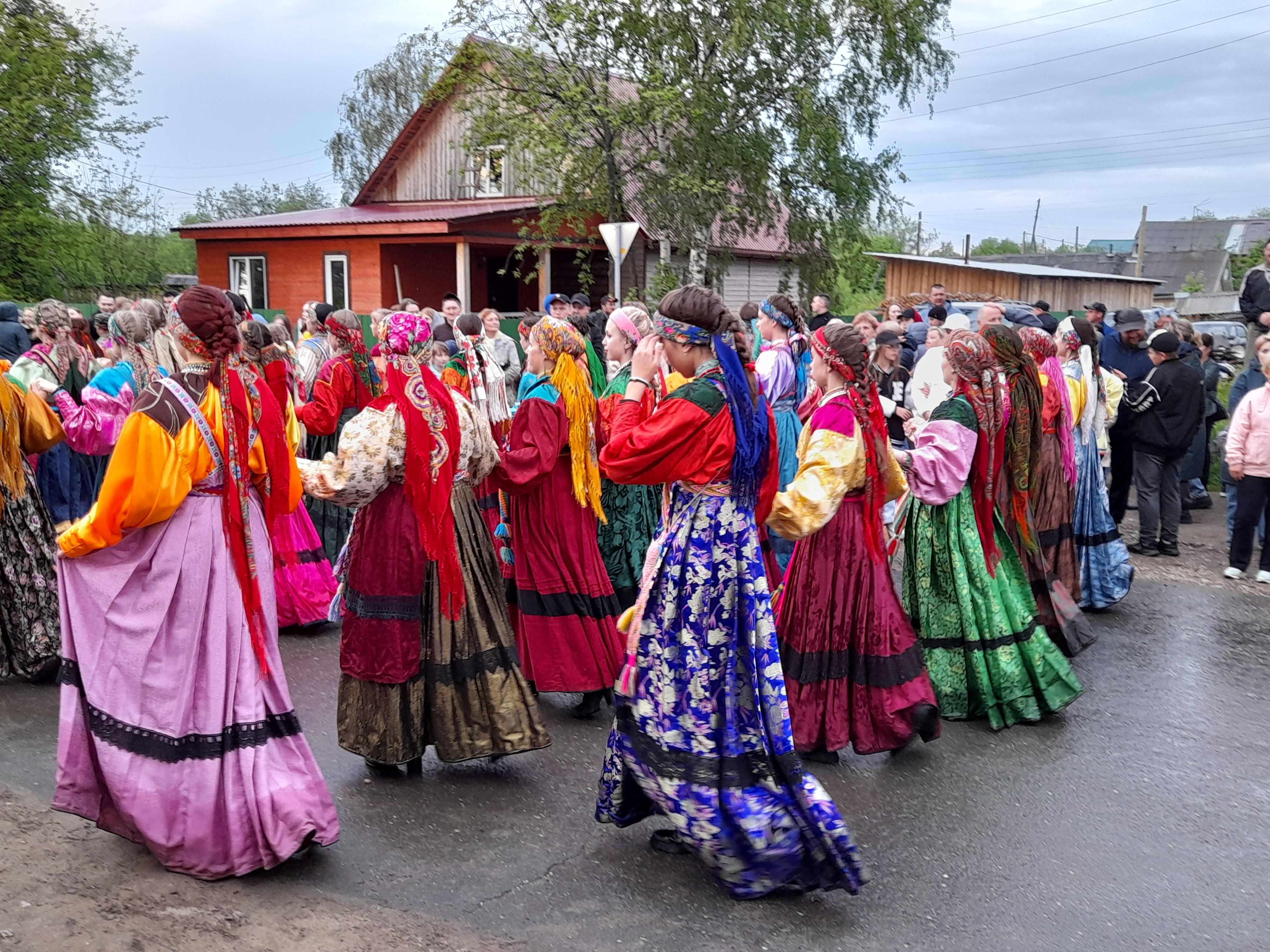

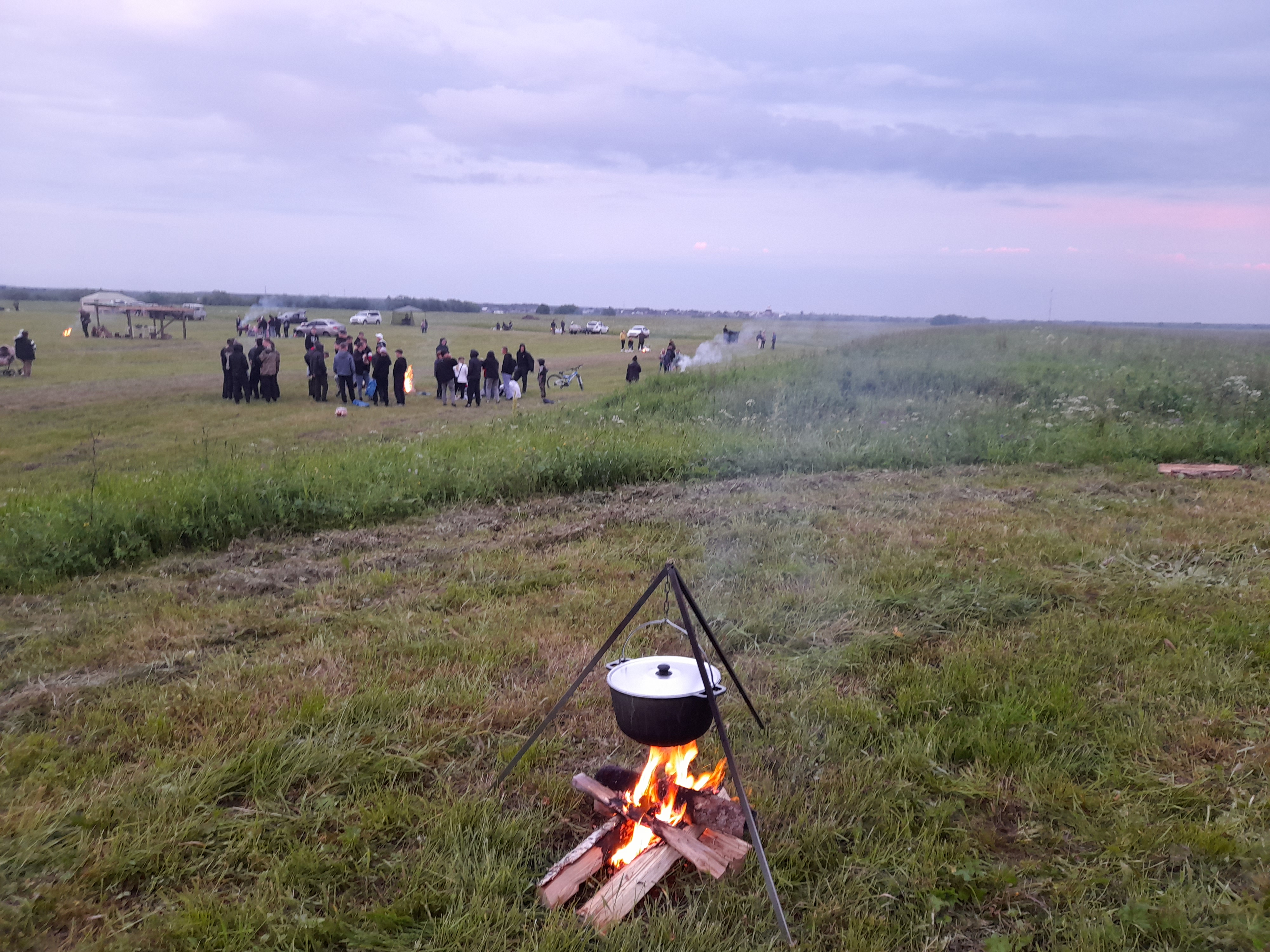
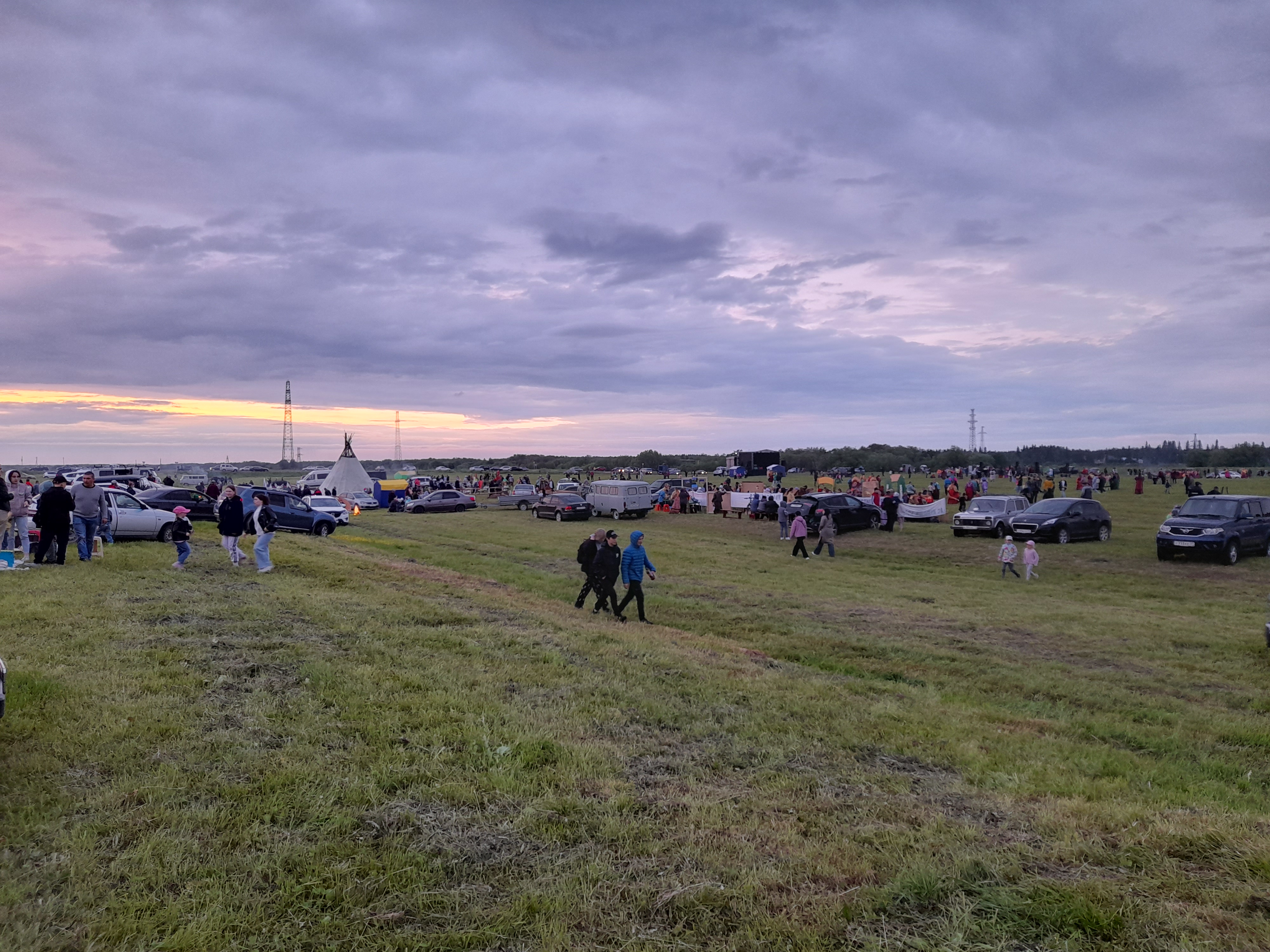
Having passed through the ‘gate’, the participants of the celebration disperse across the meadow to the place assigned to each village – sikt (literally village or courtyard). Here they stay throughout the night, make a fire, receive guests. Each ‘sikt’ has its own program.
Besides ‘sikts’ there are also family bonfires (semeynyy koster), where people gather, cook fish soup (ukha), and enjoy the time together.
One of the traditions during ‘Lud’ is a choice of a bride. The competition involves girls showcasing their skills in wearing the traditional Izhma costume (sarafan) and demonstrating their knowledge of the culture, including proficiency in songs, dances, and language. The competition echoes the ritual of initiation – symbolizing the transition from girlhood to becoming a bride. While matchmaking is not uncommon these days, a key aspect of the competition is the display of traditional costumes, some of which are hundreds of years old, while others are specially made for the occasion.
The celebration culminates with the meeting of the sun, which marks the start of a new working day and the start of summer. The participants turn to the sun and seek blessings from their ancestors to start the hay harvesting.
 Arctic Anthropology
Thank you for this nice ethnography of the Izhma Komi midsummer!
This is already the third entry in this blog on midsummer, in a regular interval every two years. The earlier ones about the Sakha Ysakh are here (https://arcticanthropology.org/2020/06/21/ysyakh-2020-solstice-festival-online/), and a little comparative piece from two years ago here https://arcticanthropology.org/2020/06/21/ysyakh-2020-solstice-festival-online/
I find striking the parallels of the spirituality in this festival, with the meeting of the sun as key element, and the connection to the spirit of the land. Another one is the horse racing, as well as the traditional costume and cultural skills contest, which we also find both in Izhma and Sakha. We could probably go on and discover many parallels. The fire symbolism alone would probably warrant a comparative analysis, and this does not seem to be restricted to the North only. Even in Germany the bonfire used to be a tradition at midsummer.
If anybody knows of any anthropological comparison of midsummer and rituals, welcome to mention this here as comment!
Thank you for this interesting publication. Well, the Nenets, who are neighbours to Izma Komi [in Nenets Ngysma], celebrate the midsummer day on August 2. This holiday is called Ta’ erj yalja [midsummer day] or Ilyin’s Day. This is not only a celebration of the first harvest of the sweet cloudberries and it is difficult to say that it is a celebration of welcoming summer, but it is rather saying goodbye to the summer – to warm and sunny polar days. After August 2nd the days become shorter, darker and colder. Most likely, the Nenets midsummer day is a celebration of the beginning of cold seasons of the year. It is interesting that the Nenets traditionally celebrate the beginning of the summer time in early January. This is really a big celebration when people finally see the first rays of the life-giving sun, which appear over the horizon after a long, dark and cold polar nights.
Thank you for this interesting publication. Well, the Nenets, who are neighbours to Izma Komi [in Nenets Ngysma], celebrate the midsummer day on August 2. This holiday is called Ta’ erj yalja [midsummer day] or Ilyin’s Day. This is not only a celebration of the first harvest of the sweet cloudberries and it is difficult to say that it is a celebration of welcoming summer, but it is rather saying goodbye to the summer – to warm and sunny polar days. After August 2nd the days become shorter, darker and colder. Most likely, the Nenets midsummer day is a celebration of the beginning of cold seasons of the year. It is interesting that the Nenets traditionally celebrate the beginning of the summer time in early January. This is really a big celebration when people finally see the first rays of the life-giving sun, which appears over the horizon after a long, dark and cold polar nights.